


Automotive CNC Machining: From Prototype Validation to Production Parts
It is a rare circumstance when a new automotive component is developed that the CAD model can't be created.
The true difficulties start when the design has to be a physical part.
A prototype bracket might have to fit in an enginebay that is constrained. Precise alignment may be necessary with respect to a combination of components in an aluminum housing. A light weight structural piece may require some machining changes before it can be put into testing.
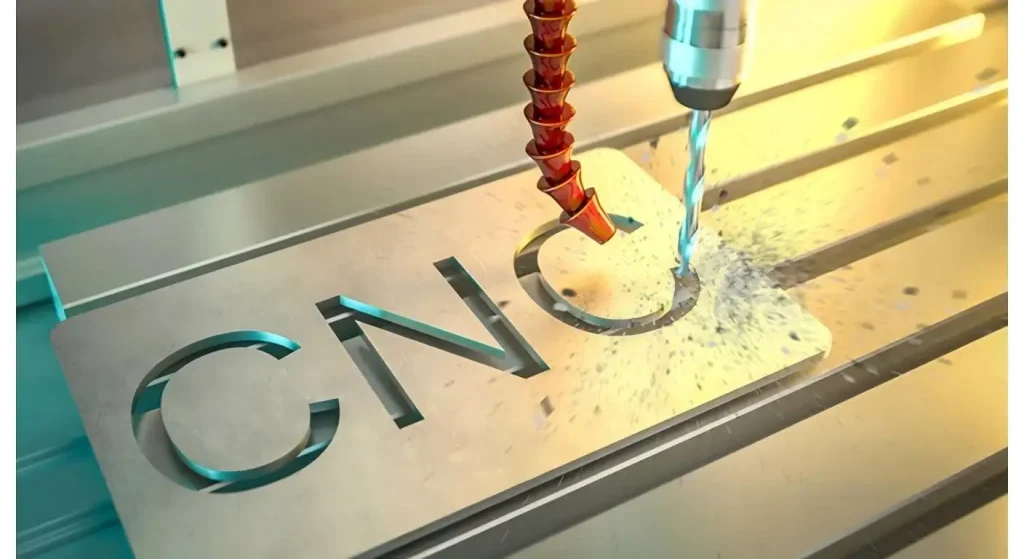
This is where Automotive CNC Machining is more than just cutting.
Develops a link between engineering concepts and actual vehicle development.
GD Prototyping offers CNC Manufacturing solutions that can assist automotive companies in the production of prototypes, custom components, and in small amounts of production.
The significance of Automotive CNC Machining in the development of vehicles.
Automotive development depends upon never-ending testing.
Engineers typically require several versions of a component before it is ready for mass production, in order to ensure that it is correct.
installation compatibility;
mechanical performance;
thermal behavior;
weight optimization;
assembly efficiency.
When design changes are happening, the traditional tooling approach can be costly.
CNC machining enables the direct production of parts that are designed by engineers, without the need for creating molds or tooling.
This in particular is valuable for:
vehicle prototypes;
performance parts;
EV components;
testing fixtures;
customized automotive assemblies.
It's not just about quicker machine time.
The aim is to shorten the design decision to engineering feedback time.
Precision Requirements should match Automotive Function
Different automotive components don't necessarily need the same tolerance.
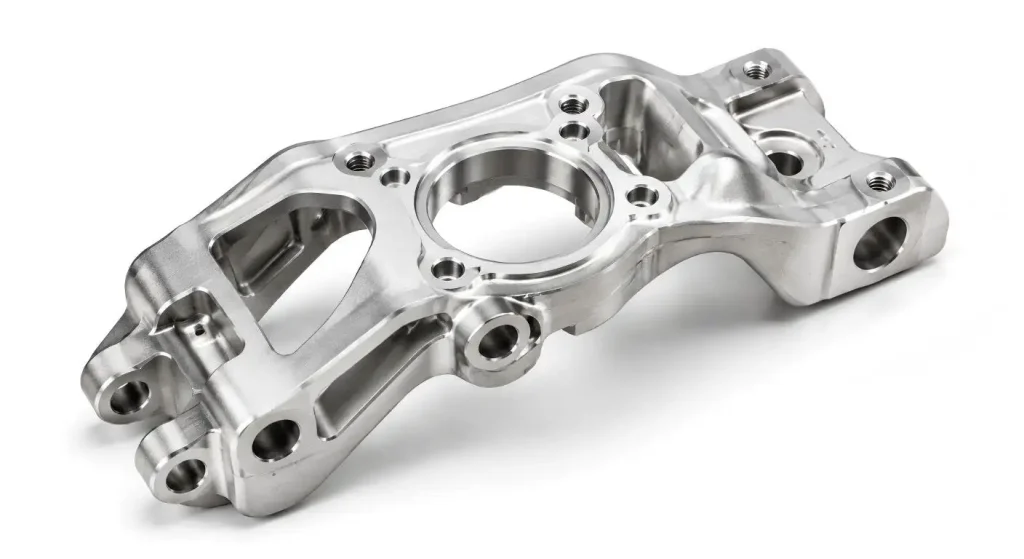
Some covers or brackets that do not have critical bearing functions may not require high level precision, but a mounting surface or bearing seat may directly impact the accuracy of assembly.
Don't put too strict tolerances everywhere, this will make the manufacture more difficult and will not make the vehicle better.
The first step of a practical Automotive CNC Machining process is to identify:
- functional surfaces;
- critical dimensions;
- assembly relationships;
- inspection requirements.
With precision CNC machining, GD Prototyping can support engineers to assess machining strategies based on part requirements instead of a one-size-fits-all solution.
| Automotive Feature | Manufacturing Focus | Why It Matters |
| Mounting Surface | Flatness and position accuracy | Ensures proper assembly |
| Shaft/Bore Area | Diameter and alignment control | Maintains mechanical movement |
| Lightweight Structure | Wall thickness control | Balances strength and weight |
| Prototype Interface | Repeatable dimensions | Supports testing cycles |
Machinery Performance is affected by Material Selection.
Sometimes, various material requirements are combined in automotive components.
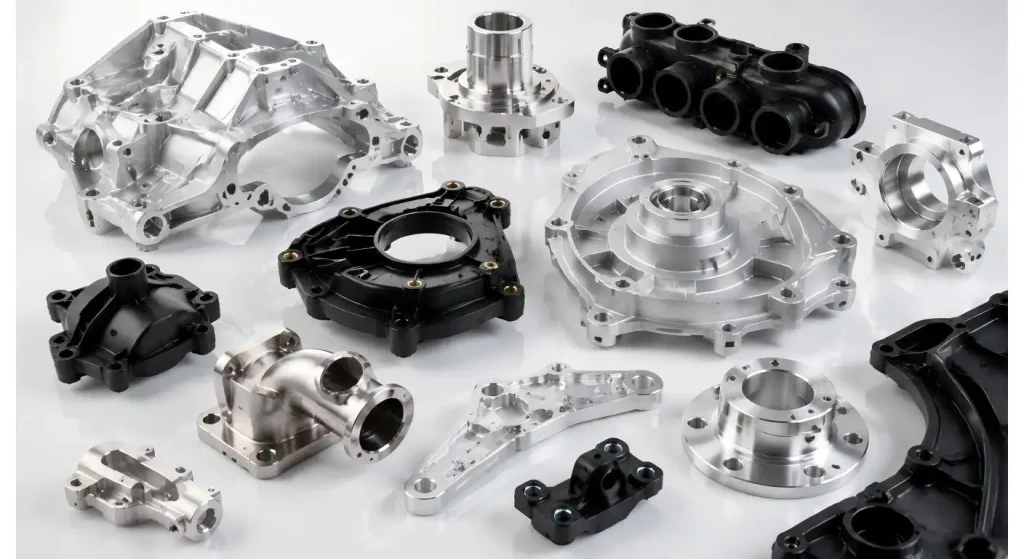
Given the importance of weight reduction, aluminium is used extensively. To ensure durability, stainless steel or steel alloys can be used. Engineering plastics can offer insulating properties or lightweight structures or special mechanical properties.
But the choice of material is not the only consideration.
It also changes:
- cutting speed;
- tool wear;
- heat generation;
- surface finish;
- dimensional stability.
For instance, in the production of aluminum components, surface quality and control of deformation becomes important, and for harder alloys tool planning is of greater importance.
GD Prototyping's CNC Machining Materials consist of metals and engineering plastics that are appropriate for various automobile prototype and production uses.
| Material | Common Automotive Use | CNC Consideration |
| Aluminum Alloy | Lightweight housings, brackets | Heat and deformation control |
| Stainless Steel | Durable mechanical components | Tool wear management |
| Titanium Alloy | High-performance applications | Cutting efficiency |
| Engineering Plastic | Covers and functional parts | Dimensional stability |
The real advantages of 5 Axis CNC Machining are when they are used.
Many automotive components are complex, with multiple surfaces that need to be precisely related.
Traditional machining techniques can involve multiple re-positioning, which adds to set up time and adds other alignment variables.
Five-axis CNC machining proves useful if the parts to be manufactured contain:
- angled surfaces;
- complex curves;
- deep cavities;
- multiple precision features.
It's not just about having more machine axes.
The true advantage is to eliminate unnecessary setting up to allow more consistent geometry control.
This method can reduce development time for automotive prototype parts and structures and enhance repeatability.
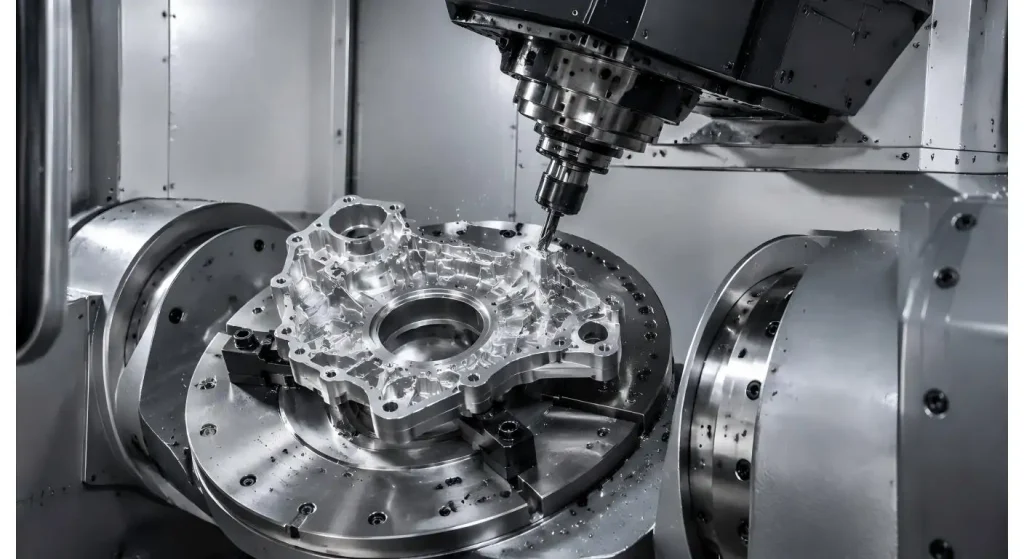
CNC Machining helps to accelerate prototype iterations in the automotive industry.
It is not unusual for an automotive engineer to make multiple prototypes before settling on a final design.
Often the testing will show improvements:
- weight reduction opportunities;
- easier assembly methods;
- Better air flow/cooling paths;
- stronger structural designs.
The ability to make these modifications with CNC machining enables these changes to be rapidly translated from CAD revision to actual testing.
Prototype machining is a more flexible choice than injection mold or casting tooling for early development stages of the product.
GD Prototyping's quick turn service enables this style of iterative engineering process and can help teams verify designs prior to making bigger investments.
Surface Finishing is an aspect of the Automotive Performance.
Machining accuracy is not the only indicator of a finished automotive component.
Surface treatment can impact:
- corrosion resistance;
- appearance;
- wear performance;
- assembly compatibility.
Some common finishes are anodizing, polishing, bead blasting and coating.
When using the machiner for automotive applications, the finishing decisions should be taken into account before machining as it could affect the dimensions and tolerances.
Surface finishing can also be performed by GD Prototyping and can be integrated into CNC machining processes.
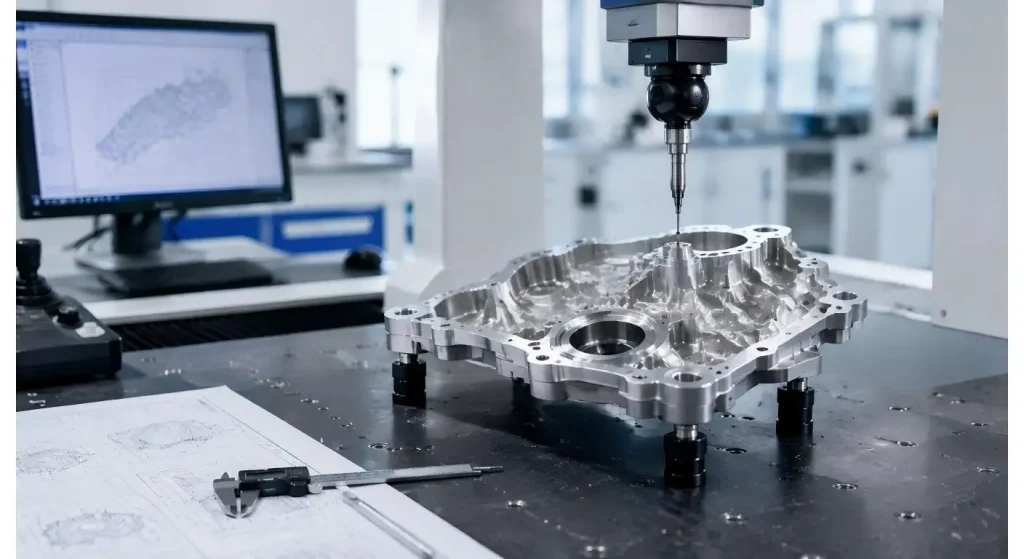
Production is not considered 'confident' until confirmed by Quality Control.
A working prototype of one, is not enough.
Automotive manufacturers must have the assurance that the same design can be reproduced to be consistent.
A good CNC manufacturing process should take into account:
dimensional inspection;
material verification;
process consistency;
repeatability between batches.
Quality Control is not limited to after machining operations.
From the start it should be an input to the manufacturing plan.
This is particularly critical when transitioning from prototype to low volume production.
Prototype Parts through to Low Volume automotive production.
CNC Machining for Auto Parts isn't just for one-off prototypes.
There are many projects for making cars in which only small production quantities are required before mass production.
The stages enable companies to:
- validate market demand;
- test assembly processes;
- optimize production designs;
- reduce launch risks.
Low volume CNC machining at GD Prototyping can bridge the gap between prototyping and mass production needs.
The key thing to consider is not only:
“Is this component amenable to being machined?”
Is this component able to be made repeatedly in the same standard?
Final Engineering Check
When selecting an Automotive CNC Machining partner, you should not only consider the accuracy of the machining, but also need to consider other factors.
An effective process is related to:
- design requirements;
- material selection;
- machining method;
- finishing process;
- inspection strategy;
- production consistency.
Making the best automotive components isn't only about doing things fast.
They're built in a controlled way, so that the engineers can test, tweak, and then knowing that they are ready for production.
FAQ
Q1. Automotive CNC Machining: What Is It?
Automotive CNC Machining applies CNC (Computer Numerically Controlled) machining techniques to produce vehicle parts, prototypes, and production parts that meet required tolerances and repeatability.
Q2. What are some of the car parts that CNC machine can be used for machining?
They are typically used in applications such as brackets, housings, fixtures, engine parts, EV parts and custom prototype structures.
Q3. So what makes CNC machining the best method to use for car prototypes?
CNC machining enables engineers to rapidly manufacture functional components from a computer-aided design (CAD) without having to wait for the costly tooling.
Q4. Do automotive parts need 5 axis CNC?
Not always. It offers benefits for complex shapes, multiple angled surfaces and parts with less setups.
Q5. Is CNC capable of automotive low volume production?
Yes. CNC machining is ideal for prototype quantities, pilot parts and custom low volume automotive components.
