


Automotive 3D Prototyping | Rapid Automotive Prototypes
Three-Dimensional Prototyping in the Automotive Sector: Rapid Innovation
In a competitive environment such as the world of automotive engineering, speedy creation of workable prototypes is a competitive edge. Automotive 3D prototyping allows engineers, designers, and manufacturers to convert digital concepts into real parts at very fast speeds, reducing design, performance, and manufacturing efficiency.
We are GD Prototyping, and we focus on custom 3D prototyping, low-volume production, functional testing, and full-scale pre-production validation. Our team has advanced materials and technologies that can be used to realize your idea, whether it is automotive plastic 3D prototypes or metal 3D printed automotive parts.
The Basics of Automotive 3D Prototyping
The automotive 3D prototyping is the manufacturing of physical components based on the digital design to test and verify automotive components before mass production. In contrast to conventional manufacturing, which entails a lot of tooling, a lot of molds, or machining, 3D prototyping enables designers to make fully operative automotive 3D prototypes just by using CAD files.
This process supports:
- Fast design and testing.
- Mechanical and structural functional testing.
- Multiplexed geometries, which may be hard or expensive to realize using traditional processes.
- Specialization or low-volume components customization.
The usage of 3D printing to create automotive prototypes is effective in enabling the engineers to test the fit, assembly, performance, and ergonomics of the prototype in a cost-effective and time-efficient way.
Important Technologies in 3D Prototyping in the Automotive Industry
The contemporary automotive 3D prototyping is based on numerous additive manufacturing technologies:
SLA (Stereolithography)
- Laser cures photopolymer resin in layers.
- Produces fine prototypes with high-resolution and a smooth surface.
- Useful in the interior part, fine housings, and optical parts.
Selective Laser Sintering (SLS)
- A laser is used to powder thermoplastics.
- Makes prototypes that are durable and functional to test in a mechanical way.
- Supports complicated geometries without the assistance of support structures.
FDM (Fused Deposition Modeling)
- Lays thermoplastics filaments in layers.
- Ideally suited to low prototyping and low volumes.
- Best in structural components, brackets, and functional assemblies.
DMLS (Direct Metal Laser Sintering)
- Manufactures metal automotive prototypes that are very precise.
- Ideal for engine parts, structural parts used in aerospace, and prototypes of high strength.
With these technologies, low-volume 3D prototyping can be performed, with the benefit of enabling manufacturers to test various iterations without the expense of tooling used in conventional tooling.
Materials
One of the most important aspects in automotive prototype 3D printing is the choice of materials. In GD Prototyping, we work with various materials to satisfy particular functional, mechanical, and aesthetic needs:
Plastics and Thermoplastics: ABS, polycarbonate, nylon - light, durable, and impact-resistant.
Resins: SLA resins are available in high-resolution and are used in detailed models and interior parts.
Composites: Structural prototypes made of carbon fiber or glass-fiber reinforced plastic.
Metals: High-strength components of aluminum, stainless steel, and titanium.
With the right choice of material, the engineers are able to simulate the production level performance such that the prototypes act like their final manufacturing counterparts.
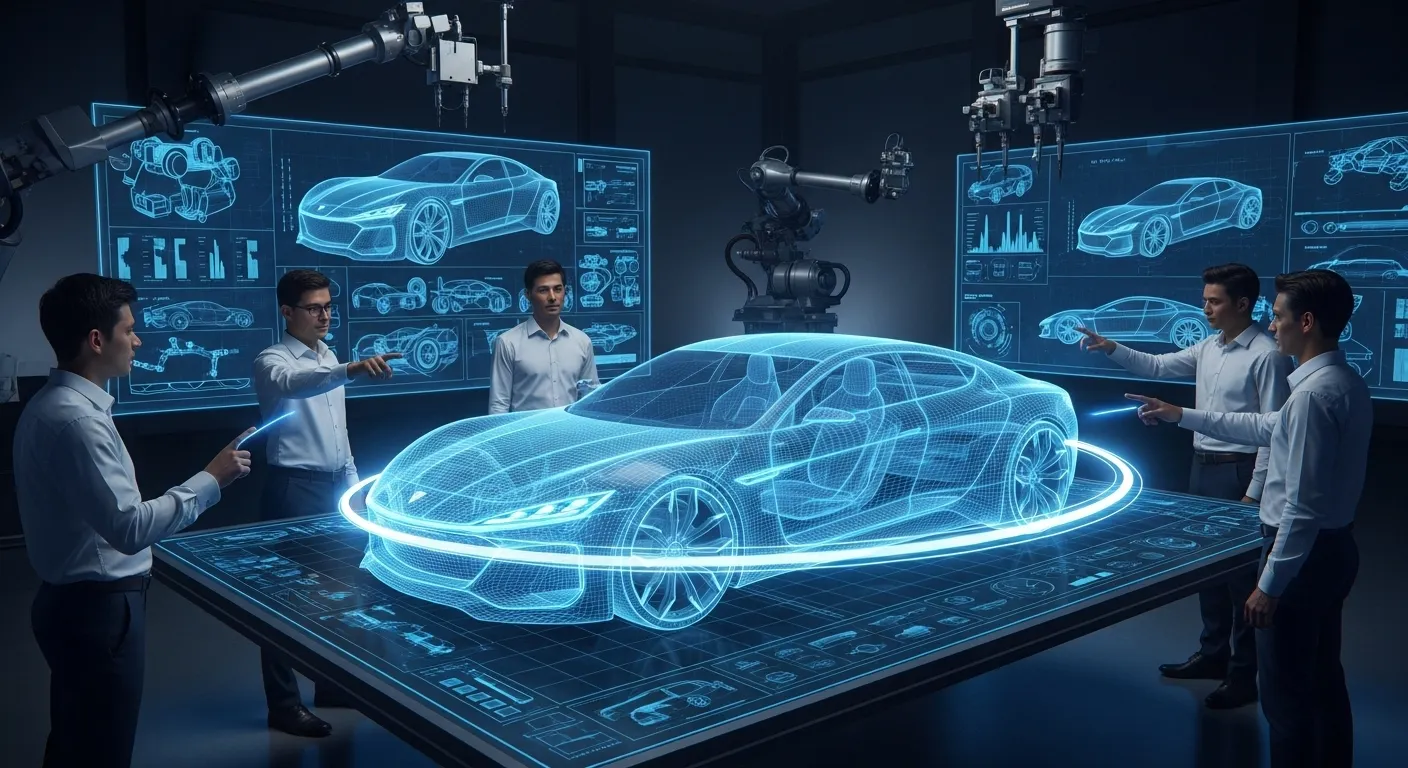
Automotive Process: 3D Prototyping
The automotive prototype development procedure combines CAD design, rapid prototyping technologies, and post-processing to create the correct functional prototypes.
Step 1: Digital Design
- CAD models of components or assemblies are created.
- Tolerances and surface finish standards are established.
- Simulation tools forecast the performance in the real world.
Step 2: 3D Printing & Fabrication
- Depending on the needs in parts, SLA, SLS, FDM, or DMLS is chosen.
- Prototypes are printed in layer-by-layer resolutions of 25-200 microns.
- High precision is achieved by Layer resolution and tolerance (+-0.1 mm to +-0.3 mm).
Step 3: Post-Processing
- The prototypes are sanded, polished, painted, plated, or anodized.
- Dimensional stability and the surface finish of automotive parts produced by 3D printing are checked.
- Mechanical or thermal testing of functional components can take place.
Step 4: Validation & Iteration
- Functional automotive 3D models are experimented with in assemblies.
- Prototypes are refined using design feedback.
- The process of rapid iteration enables one to repeat the process of testing and validation several times before final production.
This will fasten the development, cut the costs, and make sure that high-precision automotive prototypes are prepared to undergo pre-production checks.
Benefits of Prototyping
3D printing on automotive prototypes has many benefits over traditional prototyping processes:
Speed: Rapid prototyping lowers the lead times from weeks to days.
Flexibility: Allows many design cycles at a low cost.
Complex Geometries: Allows lightweight, optimized design, which is hard to realize using CNC machining.
Cost-Efficiency: Removes costly tooling and mold production.
Functional Testing: Provides the opportunity to test mechanical, structural, and thermal performance.
Customization: Special prototypes for automotive needs.
Practices of Automotive 3D Prototyping
Automotive 3D prototyping is used in a variety of applications in the industry:
Automotive Interiors
- Dashboard panels, center consoles, and components.
- Makes it possible to test ergonomic and aesthetic.
Engine and Mechanical Parts
- 3D print engine parts of a lightweight and optimized building.
- Mechanical validation prototypes.
Structural Components
- Mounts, brackets, and chassis components.
- Prototyping automotive stress components of lightweight materials.
Electronics & Housings
- Sensor, control modules, and wiring enclosure.
- Fitting, alignment, and thermal testing.
Functional Prototypes
- Complete assemblies or sub-assemblies to be tested in the real world.
- 3D printed automotive prototype parts in high-performance.
Integration and CAD Product Development
The mix of CAD-based automotive 3D prototypes with rapid prototyping can help designers shorten the product development cycle:
- The digital models are translated into real-life models.
- Stress, thermal, and assembly performance are proven through simulations.
- Early test minimizes risk and speeds up time-to-market.
The workflow is used to add value to the process of automotive prototype development, making sure that all prototypes are functional, accurate, and ready for production.
Why Use GD Prototyping in 3D Prototyping in the Auto Industry
We deal with GD Prototyping:
- Small batch and complicated 3D prototyping.
- Iterative prototyping and functional testing.
- Tight tolerances on high-precision automotive prototypes.
- Bringing together plastics, resins, composite parts, and metal parts.
Automotive interiors, structural components, engines, and electronics. Rapid prototyping of automotive components, structures, engines, and electronics.
Our capability to integrate the synergies of 3D printing technology with knowledge on material selection, surface finishing, and design validation results in the provision of accurate and functional prototypes.
Conclusion:
The 3D prototyping of Automotive is transforming the designing, testing, and production of vehicles. Through the fast 3D printing technologies, engineers are able to make functional and high-precision prototypes with short lead times, lowering costs and being more flexible than ever before.
When you need a custom interiors solution, engine solution, structural parts solution, electronics housing solution, GD Prototyping offers the solution to speed up the product development process. You can also realize new automotive designs using our skills and with less hassle and much certainty that all the prototypes will be functional and appealing to your specifications.
