


Aluminum Prototype Machining: A Simple Guide for 2026 Product Teams
Aluminum Prototype Machining is no longer a “nice to have” – it's a must-have in today's product development. Think of it as the bridge between your computer design (CAD) and a real, physical part. You can check how your product will look and function using the same materials that will be placed into the final product.
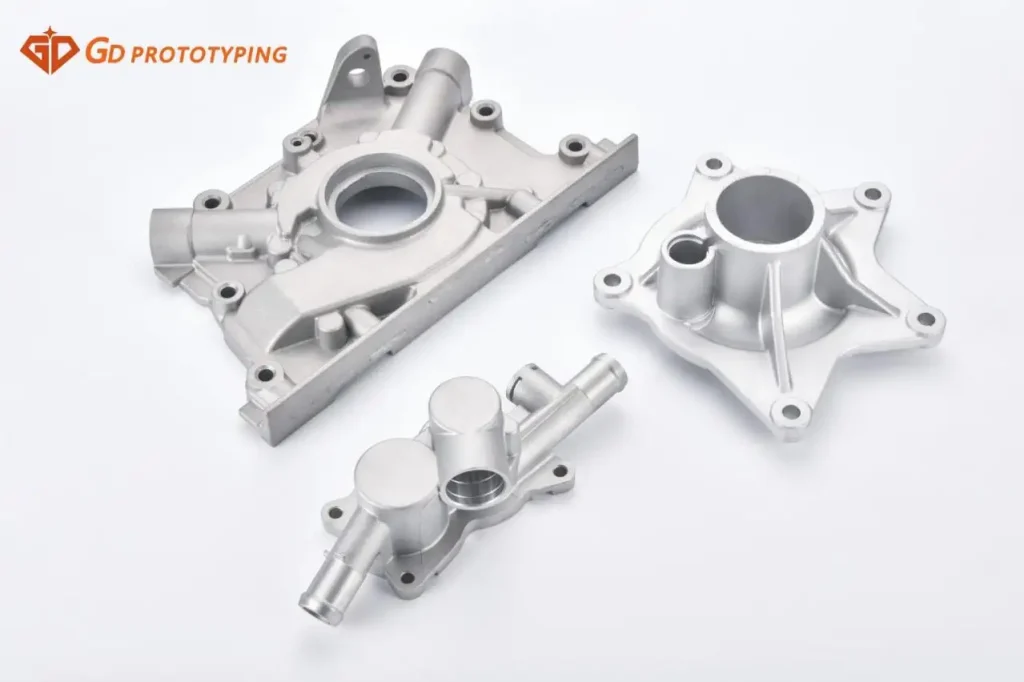
However, here's the problem: no Aluminum Prototype Machining services are equivalent. In 2026, with tighter deadlines and higher performance expectations, choosing the wrong partner can turn a prototype that looks fine into a failed launch – or a very expensive redo.
In this post, we'll walk you through:
• What Aluminum Prototype Machining really means
• Why aluminum is such a smart choice
• How GD Prototyping does it better – and how we compare to big names like Protolabs, Xometry, and Fictiv
Let's dive in.
What Exactly Is Aluminum Prototype Machining?
Aluminum Prototype Machining means using computer-controlled machines (CNC) to cut a block of aluminum into a precise, working sample of your part.
Unlike plastic prototypes or 3D-printed show-pieces, an aluminum prototype feels and behaves like the real thing. You can:
• Test mechanical strength – will it break under load?
• Assess heat resistance – does it overheat?
• Check connection – can it join with other parts?
CNC machining is the industry standard for aluminum prototype machining. With technology that achieves the greatest accuracy and consistency, you know you can count on your results.
Why Aluminum?
Engineers love aluminum for prototypes for a reason. Here's a closer look:
• Machining is straightforward – Aluminum is more time efficient to machine as the material cleaves more readily. This results in less wear on tools, meaning costs less to machine.
• Lightweight, Strong Alloys – Alloys like 6061 and 7075 are considerably strong without being heavy. Great for parts of drones and other devices. Where weight matters, aluminum is your best option.
• Corrosion is not a problem – Aluminum can coat itself with oxide which provides some protection from the elements. It's great for medical devices and other applications that may be outdoors.
• Friendly to the planet – Scrap aluminum from machining can be recycled again and again without losing quality. Green procurement teams love that.
• Handles complex shapes – You can machine thin walls, sharp corners, and tight tolerances that would be very hard to do in harder metals.
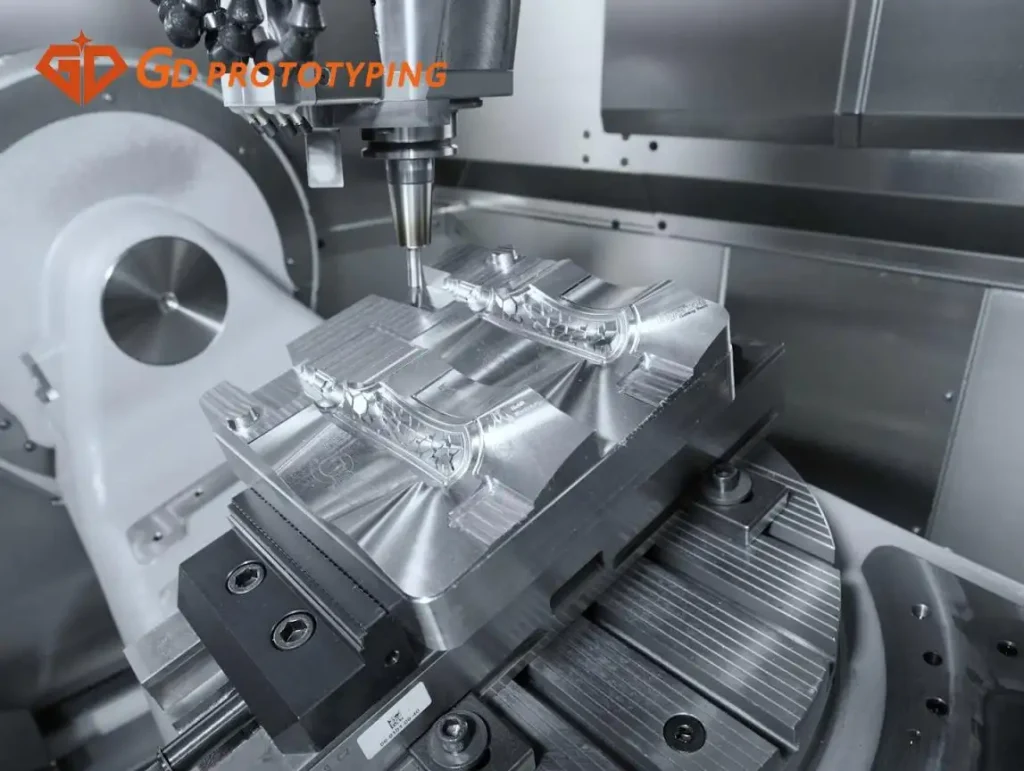
How GD Prototyping Keeps You Ahead in 2026
2026 moves fast. So does GD Prototyping. Our Aluminum Prototype Machining service uses the latest tech to give you better parts in less time.
��� Precision Machines That Deliver
We run advanced 3-axis, 4-axis, and 5-axis CNC machines – in-house, not outsourced. Tolerances go down to ±0.005 mm on aluminum alloys like 6061, 7075, and 2024. The 5-axis capability is a game changer: it machines complex parts in one setup, eliminating position errors and saving weeks of time.
��� Smarter Machining With AI
Modern CAM software now uses AI to automatically plan the best cutting path, reduce waste, and simulate the whole process before we even start.GD Prototyping has fully adopted this, giving you faster prototypes, fewer errors, and higher quality.
✨ Finishing Options That Look Professional
We don't just machine your part – we finish it:
• Anodizing – adds wear resistance and a clean, professional look
• Bead blasting – creates a smooth, matte surface
• Powder coating – durable color finish for functional prototypes
How GD Prototyping Compares (At a Glance)
Many platforms promise speed, but they often lack engineering depth.Here's how GD Prototyping's Aluminum Prototype Machining stacks up against the big names:
| Feature | GD Prototyping | Protolabs | Xometry | Fictiv |
| Standard tolerance | ±0.005 mm | ±0.05 mm | ±0.025 mm | ±0.025 mm |
| Aluminum alloys | 6061, 7075, 2024 | 6061, 7075 | All common | All common |
| 5-axis CNC | ✅ In-house | ✅ | ✅ (brokered) | ✅ (brokered) |
| DFM engineering help | Deep & collaborative | Basic | Varies | Moderate |
| Single project manager | ✅ Yes | ❌ No | ❌ No | ❌ No |
| Own machines or broker? | Own (in-house) | Own | Broker | Broker |
• Protolabs is fast (1–3 days), but their standard tolerance is 10x looser (±0.05 mm), and prices jump quickly for larger quantities.
• Xometry gives instant quotes and huge capacity, but quality varies because they use outside shops. Tolerance is ±0.025 mm, and they don't control the machines.
• Fictiv offers decent DFM support and vetted suppliers, but you pay a premium, and capacity is limited for bigger runs. Same ±0.025 mm tolerance.
��� GD Prototyping stands out with ±0.005 mm precision, full in-house multi-axis machining, a dedicated project manager for every job, and a quote in 6 hours. That means consistent quality from a single prototype to low-volume production.
��� Bottom line: If you need micron-level accuracy and real engineering collaboration – not just raw speed – GD Prototyping delivers what the platforms can't.
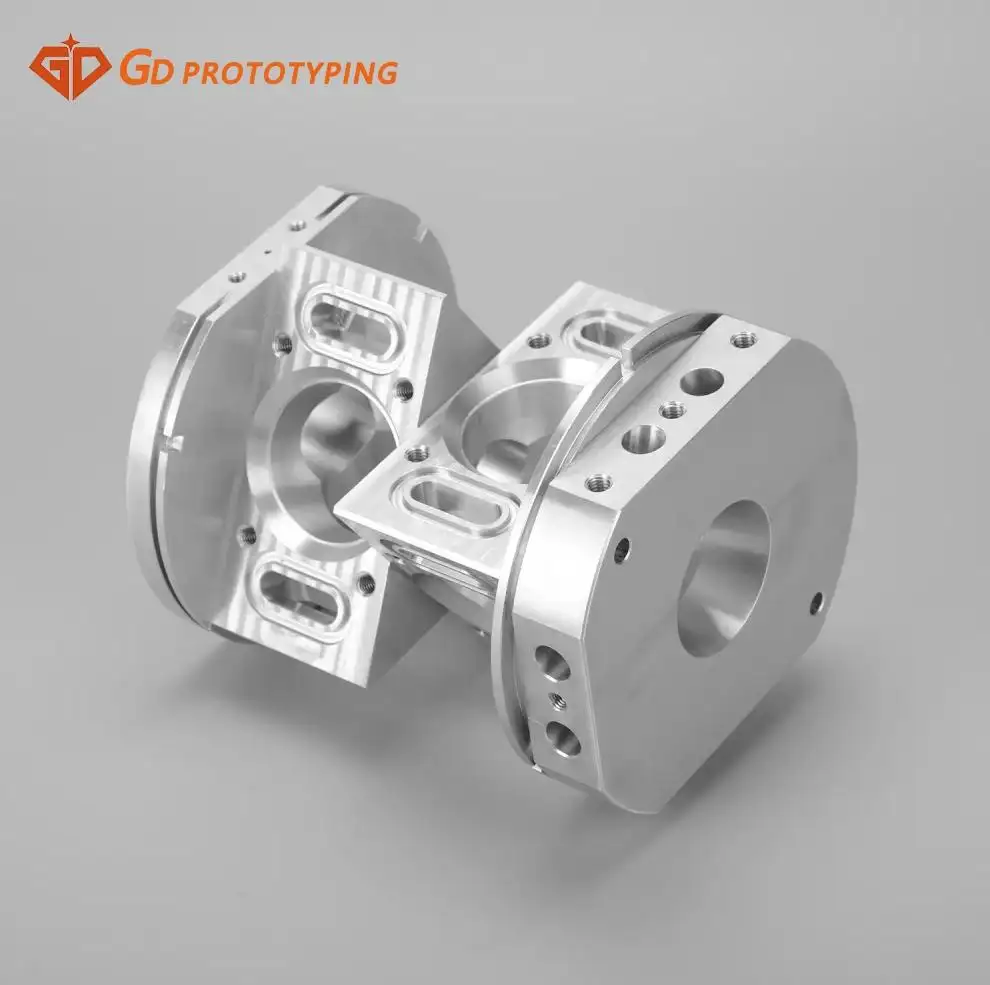
What Your Prototyping Partner Must Deliver in 2026
Saving a few dollars on a cheaper prototype often disappears when delays or rework hit. In 2026, look for a partner who offers:
✅ Real engineering help, not just order taking – DFM analysis that lowers your cost by removing unnecessarily tight tolerances before machining starts.
✅ Precision for real assemblies – Can they hold an H7 bearing fit or a flatness critical for motor mounts? For robotics, aerospace, and medical devices, this is non-negotiable.
✅ One partner from prototype to production – You don't want to switch suppliers when you move to low-volume production. Make sure they offer both.
✅ Micron-level quality control – In-process inspections and full First Article Inspection (FAI) reports that check every critical dimension.
Ready to Test Your Design With Confidence?
A prototype that arrives on time but doesn't behave like the real part isn't a shortcut – it's a trap. Whether you need one 7075 bracket with precision bearing seats or a small batch of anodized housings with complex internal geometry, the right manufacturing partner saves you from a costly redesign.
GD Prototyping's Aluminum Prototype Machining combines micron-level precision, in-house multi-axis capacity, and dedicated engineering support – built specifically for 2026 product development.
➡️ Ready to move faster? Visit our Aluminum Prototype Machining service page to request a quote, upload your CAD files, and get engineering feedback within 6 hours.
FAQ
Q: How quickly will I get an aluminum prototype from GD Prototyping?
A: We aim to give quotes within 6 hours of receiving your CAD files. Time to ship also relies on the complexity of the parts and quantity of parts ordered. However, simple prototypes are often shipped within 5 to 7 business days.
Q: Do you only handle prototypes or can you handle small production runs, too?
A: We handle both. We offer low-volume manufacturing, plus injection molding, die casting, and more. You can start with a single prototype and scale up production, all without changing suppliers.
Q: What formats do I need for you to provide a quote?
A: STEP, IGES, STL, SolidWorks, AutoCAD, and most CAD file formats can be quoted. Just upload these files, and we will do the rest.
Q: Is there a cost for Design for Manufacturing feedback?
A: None at all. DFM is a free service we provide with each quote. We will outline issues and suggest ways to resolve them.
Q: Do you machine other metals, or only aluminum?
A: We do. This includes steel, brass, copper, titanium, and some engineering plastics. Aluminum is the most popular offering for customers looking for fast, functional prototypes.
