


Aluminum CNC Machining For Tight Tolerances: GD Prototyping's High-Speed Multi-Axis Expertise
Introduction
CNC Machining has revolutionized construction with aluminum. In 2026, the new standard is outlandish engineering designs which challenge 3-axis machining. Gone are the days with lead times of weeks, and several setups for intricate multi-faceted features, and deep cavity machining.
At GD Prototyping, engineering support partnered with 4-axis and 5-axis Aluminum CNC Machining enables the engineering and procurement teams of our customers to redefine benchmarks. The industry has experienced the benefits of components looking and functioning better, coupled with precision, shortened time to market, and less assembly labor.
What Causes the 2026 Aluminum CNC Machining Gap?
Designs no longer need to be simplified for parts that are considered "hard to machine" with modern design and procurement paradigms. Engineering has integrated into aerospace, medical devices, EV, and consumer electronics, where design lightweighting, integrated aesthetics, and effective thermal management are the standards.
GD Prototyping is leading the charge in the CNC aluminum machining of complex geometric and freeform surfaces. Designs with undercuts, inclined holes, variable thickness, and walls, are readily reproducible. GD Prototyping has capitalized on the multi-axis machining methods that other firms have been hesitant to pursue. With GD Prototyping, the design challenge is met with the heightened manufacturing standards of the 2026.
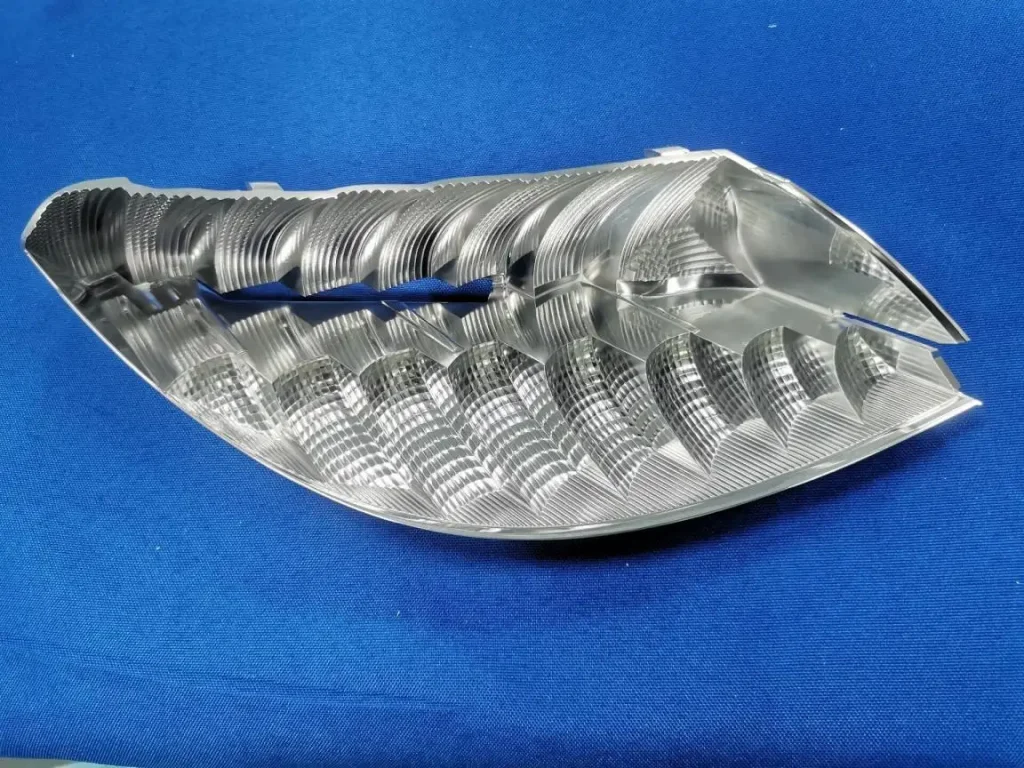
The Multi-Axis Difference: One Setup, Perfect Complexity
Multi-axis Aluminum CNC Machining Designs are capable of machining parts in four or more simultaneous directional motions. At GD Prototyping, we utilize 4 axis and 5 axis machining centers, allowing us to approach parts at virtually any angle required without manual repositioning. This capability addresses the challenges involved with the production of complex geometries:
• Reduction of Setup Time: Time previously used to reposition fixtures on a three axis machine for five or more setups is eliminated with our 5-axis systems. Lead times can be reduced by up to 60% when changing a single clamp.
• Elimination of Accumulated Tolerances: Multi-axis Aluminum CNC Machining is based on maintaining a single datum reference. This means repositioning are eliminated mitigating situational errors. Achievable tolerances are ±0.005 mm, even on parts with many geometrical features.
• Enabling Access to Featuren That Seemed Impossible: Not only can we create complex undercuts, but angled holes and deep cavities are routinely machined. Parts that 3-axis systems are unable to machine without custom fixturing can be processed by GD Prototyping.
Improving Surface Finish on Uncommonly Complex Geometries: Multi-axis systems are capable of maintaining the optimal tool-axis to part-surface angle reducing step-marks. Surface finishes are improved by being less angled and even directly on the machine.
Applications That Benefit the Most
Multi-axis Aluminum CNC Machining is a great approach for a specific family of parts. For Engineers and Procurement professionals, this strategy is applicable to:
• Turbine Blades, and Impellers: 5-Axis systems are the way to go for thin walls and freeform complex aerodynamic profiles with consideration to potential aerodynamic losses.
• Medical Instruments: Ergonomic curves and concealed undercuts with internal flow systems are only achievable through the customization and superior surface quality of multi-axis Aluminum CNC Machining.
• EV Battery Pack: Enhanced thermal performance & structural integrity are achievable when large, deep, and complex parts are produced in a single setup with multiple mounting orientations & cooling channels.
• Aerospace Structural Brackets: Components that are strictly weight-reduced while also complex and organic are mechanically processed to the highest standard for both dimensional and intrinsic properties.
• Consumer Electronics: Unibody designs that are seamless with internal features such as ribbing, speaker grilles, and connector cutouts are produced in a shorter time frame with a significantly reduced scrap/rejection rate.
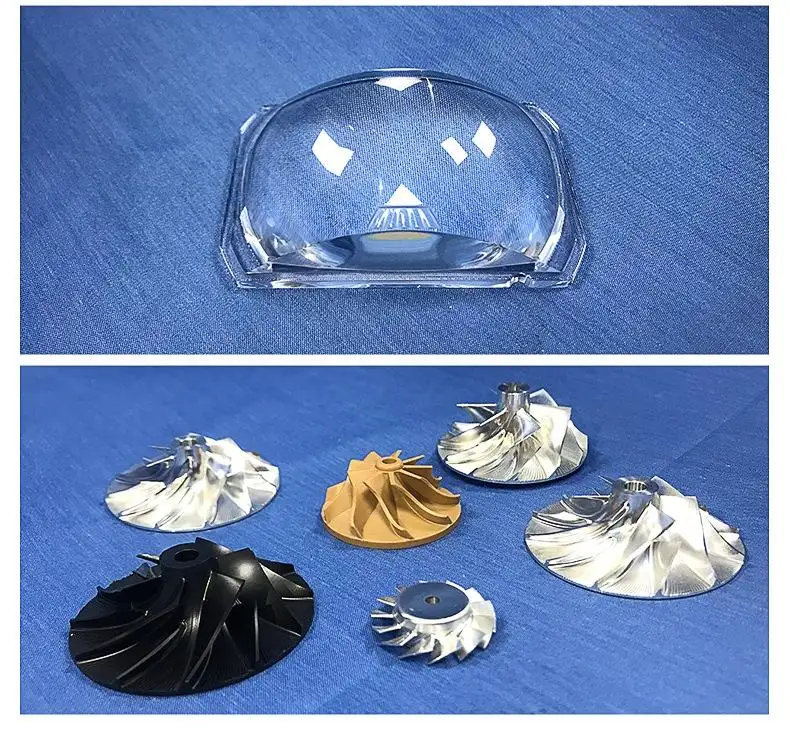
Integration of GD Prototyping with Design for Manufacturing (DFM)
Technology is not the only influencing factor. Below is a list of some of the ways that our DFM process will serve you when it comes to complex aluminum designs:
•Ex-ante Design Evaluation: We conduct our 3D designs, taking an initial look to see how the foreseeable Aluminum CNC Machining will go, and to recognize features such as large unsupported thin walls or closed fillets.
•Moving Along: We effectively manage our software and design all the possible routes for our cut paths in order to avert any issues with the tools and machinery to the design which then free paths to the next multi-axis path.
•Workholding Options: We propose fixation solutions that are flexible and easy to use and will provide you the opportunity to use 5-axis access without needing soft jaws or elaborate clamps.
•Cycle Time Reduction: By adjusting tool entry angles and stepover patterns, we shave minutes off each operation—directly lowering your cost per part without changing the design intent.
•Real-World Cost Savings: Past clients have achieved 15–25% lower per-part costs on complex geometries after implementing our DFM recommendations, all while keeping their original functional requirements intact.
Surface Finishing Complements Complex Machining
Your complex geometry may require more than just machining; consider finishes for your next project:
•Anodizing Finishing without Contracting out: Finishing complex geometries can be a risk if contracting out the anodizing services; at the Machining Center, we can apply Type II and Type III anodizing directly after Aluminum CNC Machining.
•Anodizing Complex Designs and Internal Features: Our designers have built our line for anodizing to be sure that the electrolysis and anodizing will reach every nook and cranny of the complex designs; including deep undercuts and blind holes that leave parts with uncoated bare spots.
•Anodizing for Consistent Design: Our anodizing colored finishes can also have excellent matte black and clear silver finishes on every side of your multi-axis part; which is essential for medical devices and consumer products.
•Anodizing to Assist Wear Resistance: The finishes assist the designed use of components and moving parts for better use during complex sliding with features such as cam tracks or hinge pockets which have anodized designs that assist the life of the components.
•Seamless Process Integration: Because we control both machining and finishing, we can mask specific surfaces before anodizing—such as precision bores or grounding pads—without additional setup fees.
Sustainability and Efficiency Go Hand in Hand
Multi-axis Aluminum CNC Machining is not only more capable—it is also more sustainable. Here is how our sustainable practices add value to your supply chain:
•Single-Setup Energy Savings: Multi-axis machining consolidates operations, consuming up to 40% less energy per complex part compared to sequential 3-axis workcells requiring multiple machine starts and stops.
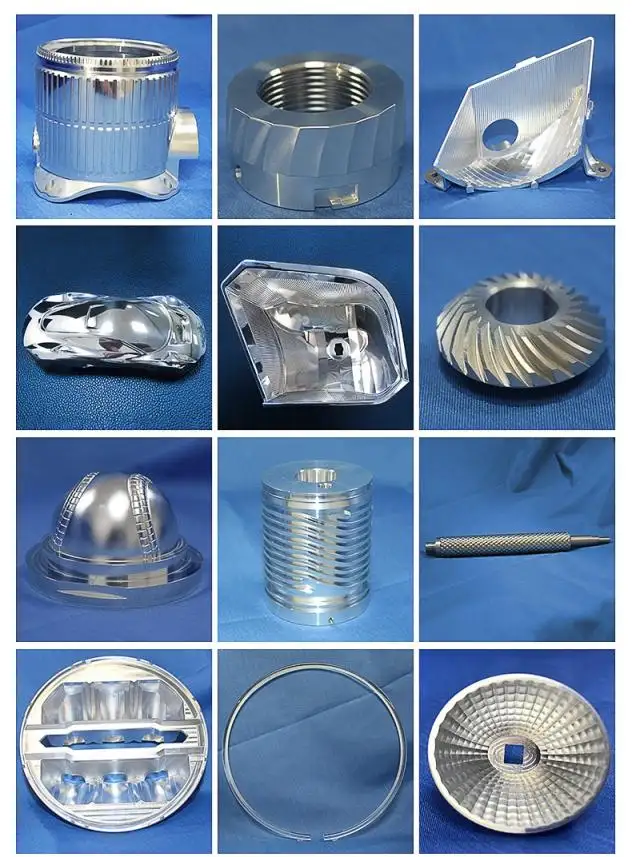
•Aluminum Chip Recycling: We've achieved the capability of capturing and recycling the majority of aluminum chips ~98%, and returning this material to the supply chain and lessening the need for virgin aluminum.
•Minimum Quantity Lubrication (MQL): The MQL systems we utilize apply measured amounts of vegetable-based lubricant to the cutting edge of the tool, resulting in a reduction of fluid usage by a whopping 90% plus on applicable aluminum alloys and removes coolant disposal costs completely.
•Transport Emissions Reduction: Completing a complex part in one clamping translates to no intermediate transport between workstations.
Why GD Prototyping Is Your Partner for Complex Aluminum Parts
Selecting a manufacturing partner for intricate geometries is not just about having a list of machines at their disposal; it is about engineering depth, a robust quality system, and a culture of transparency.
At GD Prototyping, we provide the following:
•Machine Capability: A complete line of 3-axis, 4-axis and 5-axis CNC machining centers that work on aluminum grades 6061, 7075, 2024, and other high-performance alloys.
•Quality Assurance: In-process probing and post-process CMM inspection ensures every intricate detail is to spec, along with fully traceable documents.
•Prototype To Production: We transition effortlessly from 1–10 units for design validation to 1,000+ units for production all in one go, using the same multi-axis programs and fixtures.
•Quick Lead Times: Geometric parts with finishes and anodizing typically take us about 7-14 days to complete, but we offer even faster options.
•Global Compliance: We certify that all parts are processed to ISO 9001:2025 and provide full traceability of raw materials and complete documentation for export.
Conclusion
Designs can now be made without the restriction of manufacturability. With GD Prototyping's multi-axis Aluminum CNC Machining, complexity of geometry is now a challenge that can be embraced.
Impellers, medical housings, EV battery parts, aerospace brackets, and many more require an industry-leading precision, speed, and surface quality. The future is 2026 and beyond.
Get in touch for your complex aluminum project. We'll demonstrate how the right technology in partnership with us can transform your boldest designs into dependable solutions at an optimum price.
FREQUENTLY ASKED QUESTIONS (FAQ)
Q: Which types of complex geometries can multi-axis Aluminum CNC Machining work with?
A: They can work with undercuts, inclined holes, deep cavities, freeform surfaces, impeller blades, and ergonomic medical housings which usually require multiple setups on 3-axis machines.
Q: Is 4-axis and 5-axis Aluminum CNC Machining possible with GD Prototyping?
A: Yes, 4-axis and 5-axis CNC machines allow us to produce a part made to your specifications, adjusting for the price and to the complexity of the part.
Q: What grades of aluminum are suitable for advanced multi-axis machining?
A: For advanced multi-axis machining, most commonly used grades are 6061, 7075, 2024, and 5052. They all have a certain trade-off between machinability, strength, and corrosion resistant. For your specific geometry, the best grade can be determined by our DFM department.
