


Affordable CNC Machining Services: How to Balance Tolerance, Surface Finish, and Cost
Affordable CNC Machining Services at a cheaper rate do not suggest poor accuracy or quality. Each element of a CNC project - part geometry, materials, tolerances, surface roughness, machining, inspection strategy, and production volume - creates a balance that drives cost.
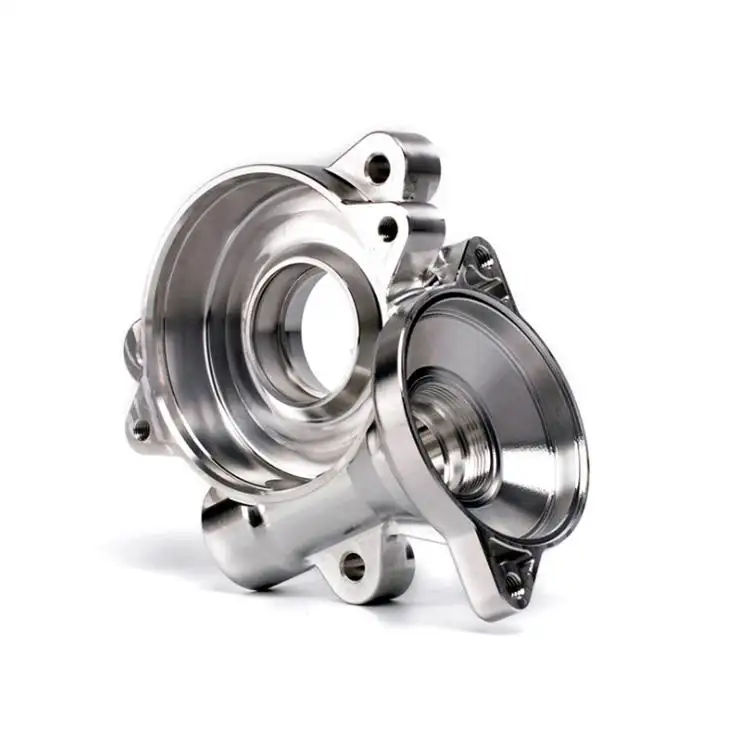
The CNC design with the best cost efficiency employs high tolerances and surface roughness in areas that affect fit, sealing, alignment and movement, and that are visually apparent on the finished part. Specifying the same surface roughness and tolerances for all surfaces of the part can result in significant increases in design and machining costs. Many of these surface roughness and tolerance specifications can be applied with little or no impact on the functionality of the part.
What Affects the Cost of CNC Machining Services?
When considering a CNC quote, think beyond just machine time. The cost of programming, setup, tooling, raw materials, inspection, finishing and production risk are all included in the price.
Programming and Setup
Costs associated with Programming and Setup are mostly fixed. For lower volume production runs, costs are spread across a smaller number of parts, meaning the cost per part is higher.
To make Affordable CNC Machining Services more viable for small production runs, the setup cost can be reduced by consolidating machining operations.
Machine Cycle Time
The cost is higher for longer machining cycles. Some of the more critical factors that influence cycle time are:
• The volume of material to be removed
• Design features that require deep cavities and narrow slots
• Tooling that requires a long overhang
• Multiple finishing operations
• Tool changes that are frequent
• Feed rates that are slow
• Difficult to remove chips
A design that is simple to look at can easily become high cost when multiple setups are required and a large volume of material is required to be removed.
Inspection Requirements
High tolerances may require additional controls and systems to ensure that a part is measured, inspected, and reported. These additional inspections and controls add time to the process to ensure that the tolerances are met.
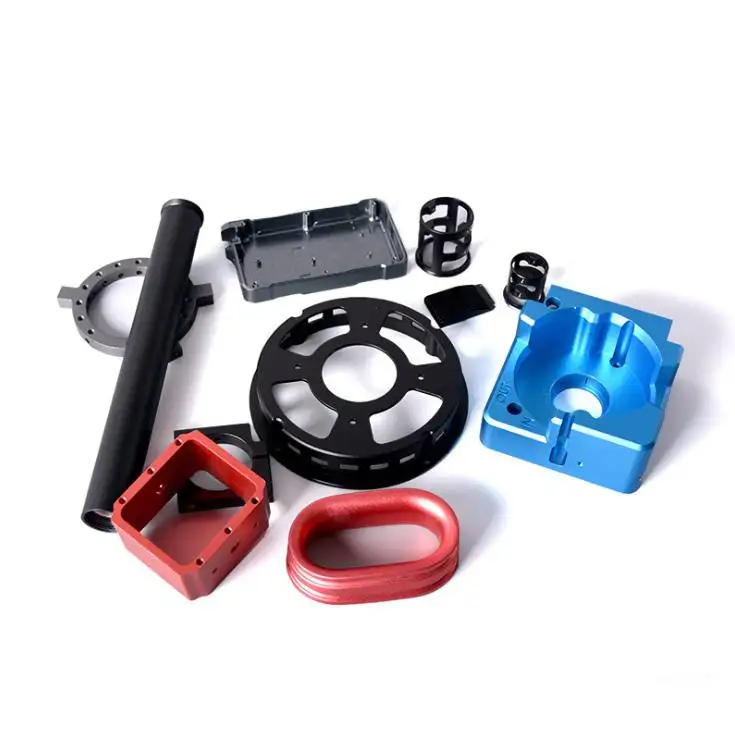
Why CNC Machining with Tight Tolerances Costs More?
Tolerance in CNC defines the amount of variation in a dimension from the nominal value. A smaller tolerance range means that variation in a larger number of factors will need to be controlled.
Dimensional accuracy may be influenced by:
• Deflection and wear of the cutting tool
• Heat generated in cutting
• Stress in the workpiece
• Manufacturing fixture pressure
• Growth in the machine
• Deformation of thin walls
• Measurement uncertainty
Components with tight tolerances will need lighter finishing cuts, slower feed rates, require more stable fixtures, more frequent inspection, and of course, tool compensation. Some materials, such as plastics, thin walled aluminum, and even some thin long shafts will be very sensitive to cutting heat and deformation.
| Feature Type | Recommended Tolerance Strategy | Cost Effect |
| Non-mating exterior profile | Use general tolerances | Low |
| Mounting or locating holes | Specify depending on assembly requirements | Medium |
| Bearing seats and precision fits | Apply local tight tolerances | High |
| Cosmetic surfaces | Control appearance rather than dimension | Varies |
| Entire part with tight tolerances | Avoid unless absolutely necessary | Very high |
Critical dimensions clearly defined and located away from non-critical geometry will almost always result in a more economical CNC machining solution.
How Does Surface Finish Affect CNC Machining Cost?
Surface finish and surface texture are related in that surface finish is a description of the nature of the surface of the workpiece at a microscopic level. Surface texture is most commonly measured by Ra. Surface finish may also refer to a number of post-processing treatments such as anodizing, sandblasting, and polishing.
As-Machined Surfaces
An as-machined finish is usually the most economical option. Tool marks remain visible, but the surface may be suitable for brackets, internal components, housings, and non-cosmetic features.
Low-Roughness Machined Surfaces
It is not always true that lower Ra is better. The following can help achieve a lower Ra:
• Smaller depth of cut
• Slower feed rate
• Sharp/specialized tooling
• Extra finishing passes
• Enhanced workpiece restraint
• More thorough surface inspection
Low-Roughness specification should primarily be reserved for sealing faces, sliding surfaces, optical elements, surfaces that come into contact with fluids, and where a precision fit is required.
Secondary Finishing
| Finish | Primary Purpose | Primary Cost Drivers |
| As-Machined | Remains as-cut by CNC | Minimal post-processing |
| Sandblasting | Uniform matte finish | Masking, surface area, and evenness |
| Anodizing | Surface treatment to improve wear resistance and corrosion of aluminum | Saturated appearance, depth of finish, and dimensional balancing |
| Polishing | Smooth or reflective finish | High level of manual labor, difficulty of part geometry |
| Brushing | Directional satin finish | Grain direction and finish evenness |
Achieving a Balance Between Tolerance, Surface Finish, and Cost
First, determine the function of each part feature and rank the features that follow according to their importance. The remaining features can be deprioritized.
• Sealing Faces
• Precision Fitting Surfaces
• Cosmetic Surfaces
• Non-Critical Internal Areas
Features of a Technical Drawing:
• Avoid tight tolerances on the entire drawing.
• Tight tolerances should only be specified on necessary features.
• Use general tolerances for non-critical features.
• Use low Ra values only on functional surfaces.
• Specify and clearly indicate finishing requirements and apply masking as required.
• Differentiate surfaces/edges that are to be finished from those that are to be measured.
When evaluating the total manufacturing cost, consider finishing, inspection, the risk of reworking, the difficulty of assembly, the cost of transportation, the long-term reliability of the product, and the cost of machining.
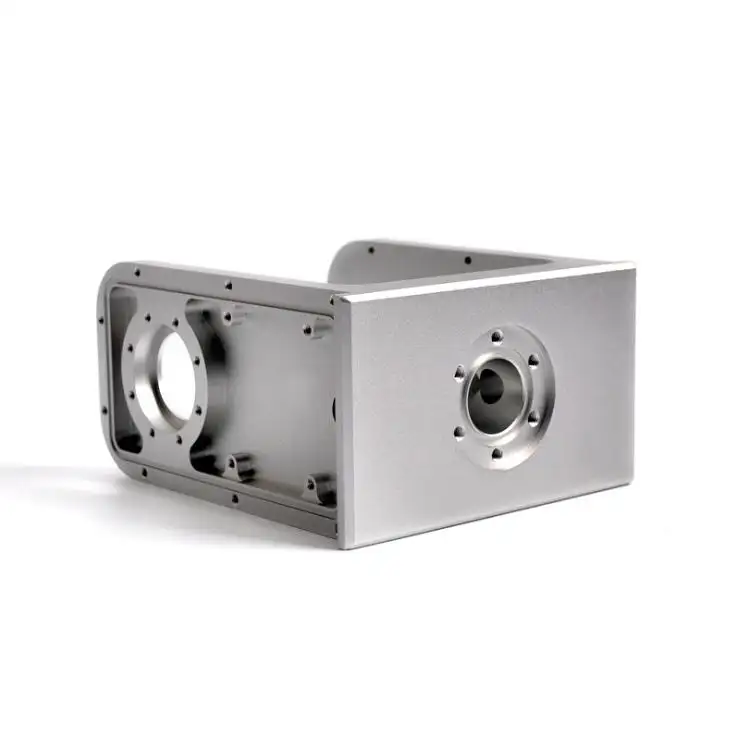
DFM Strategies for More Affordable CNC Machining Services
Design for manufacturability can reduce both machining and quality-control costs. Useful strategies include:
• Avoid unnecessary deep cavities.
• Match internal corner radii to standard end mills.
• Reduce extremely thin walls and tall, narrow features.
• Use standard hole sizes and thread specifications.
• Avoid slots that require unusually small or long tools.
• Use near-net-size material when practical.
• Account for anodizing or plating thickness.
• Group features that can be machined in one setup.
For rotational components, choose CNC turning, and for prismatic components, choose CNC milling.
These selections will produce the components with minimal cost, functionally, and time; as well as, reduce the risk of warping, broken tools and unintentional inaccuracies.
When Are 3-Axis, 3+2-Axis, and 5-Axis Milling Technologies Justified?
| Process | Applicable Components | Pricing Edge |
| 3-Axis Milling | Flat features, basic holes and slots | Least expensive programming and operation |
| 4-Axis Milling | Circumferential or multi-sided features | Low cost due to reduction of repositioning |
| 3+2-Axis Milling | Multi-sided or angled features | Low cost due to reduction of setups and increased accuracy |
| 5-Axis Milling (Simultaneous) | Complex parts with intricate surfaces | Significant reduction in surface finishing and much fewer blend marks |
CNC Turning]axial shafts, sleeves, and similar rotational components]Least expensive due to machining of axisymmetric parts
Advanced manufacturing technologies, especially 5-axis technology, may suggest a lower total cost. 5-axis machining, as an example, may be more cost effective than multiple 3-axis setups as it can eliminate the need for fixtures and setups as well as prevent alignment errors that accumulate and lead to misalignment.
GD Prototyping's range of services for prototyping, small batch, and production machining includes CNC milling, 3+2-axis and synchronous five-axis machining, and CNC turning. This range of services enables more cost effective manufacturing methods to be employed based on part geometry rather than defaulting to the more expensive methods.
How Materials Influence CNC Machining Cost
Affordable CNC Machining Services depend on material price, machinability, tool wear, stock availability, and dimensional stability—not raw material cost alone.
| Material Group | Relative Cost Level | Machining Considerations |
| Aluminum | Low–Medium | Fast cutting, good chip control, widely available |
| Carbon Steel | Low–Medium | Moderate tool wear; hardness affects cycle time |
| Brass and Copper | Medium | Brass machines well; copper may create heat and chip-control issues |
| Stainless Steel | Medium–High | Higher cutting forces, slower feeds, greater tool wear |
| Titanium | High | Low cutting speed, heat concentration, expensive tooling |
| ABS, PC, POM, Nylon | Low–Medium | Fast machining but sensitive to heat and clamping |
| PEEK, PPS, PTFE | High | Higher stock cost and material-specific setup requirements |
| Fiber-Reinforced Plastics | Medium–High | Abrasive fibers accelerate tool wear |
Selecting a material with stable supply and suitable machinability can reduce cycle time, scrap, and inspection costs.
Depending on material, geometry, size, workholding, and inspection requirements, tight tolerances of approximately ±0.05 mm and surface roughness down to Ra 0.2 μm may be achievable. These values should be reviewed for each project rather than treated as default specifications for every feature.
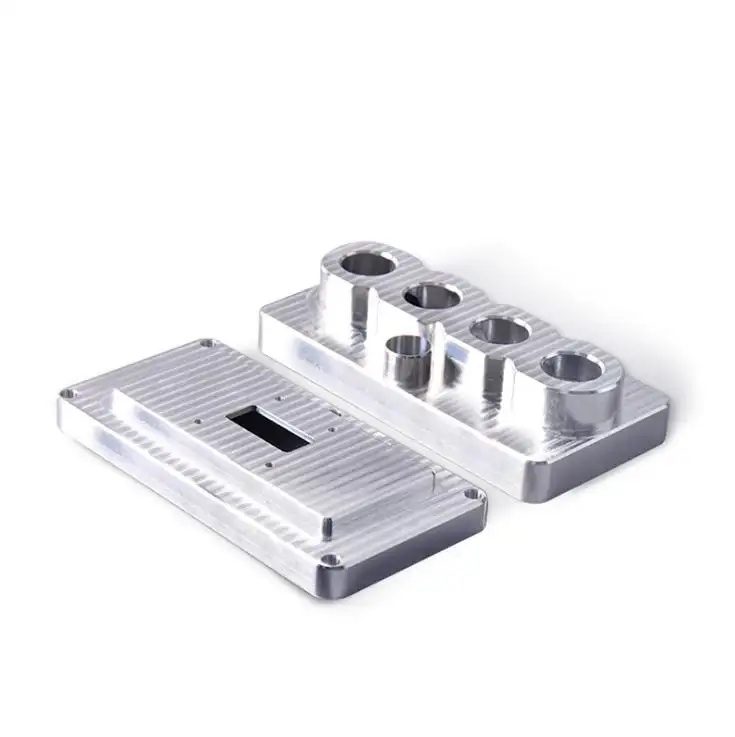
Closing Words: Choosing Affordable CNC Machining Services
Affordable CNC Machining Services depend on applying tight tolerances and premium finishes only where function requires them. GD Prototyping supports metal and engineering plastic parts with as-machined, anodized, sandblasted, polished, brushed, and custom finishes.
With the capacity of an internal machine shop, we are able to produce prototypes as well as run production on demand, and we are able to develop/fabricate models with one-on-one support and respond within 12 hours. For a Design for Manufacturing (DFM) review, please provide your drawings, materials, quantities, tolerances, and finish requirements.
FAQs
Q1. What CNC machining processes does GD Prototyping offer?
GD Prototyping offers 3-axis, 4-axis, 3+2-axis, and 5-axis simultaneous CNC milling and turning across prototyping, low-volume production, and end-use components.
Q2. How does GD Prototyping offer Affordable CNC Machining Services?
The engineering team focuses on cost reduction for the client and selects the most economical method, setup, and strategy based on geometry, tolerance, material and surface requirements, inspections, and quantities.
Q3. What is the expected CNC machining tolerance for GD Prototyping?
Given the workholding, inspection requirements, part size, geometry, and material, tolerances of ±0.05 mm are expected. Each individual case is evaluated.
Q4. Is surface roughness of Ra 0.2 μm achievable at GD Prototyping?
Ra 0.2 μm is potentially achievable in certain materials and features as a non-standard requirement and controlled finishing processes.
Q5. What is the range of materials that GD Prototyping can offer machining of?
Materials range from aluminum, steel and its alloys, brass, copper, titanium, and magnesium to engineering plastics such as ABS, PC, PMMA, POM, nylon, PEEK, PPS, and PTFE, as well as reinforced plastics.
