


Additive Manufacturing Prototypes | 3D Prototyping Services
What are Additive Manufacturing Prototypes?
Additive manufacturing prototypes are prototypical objects or components that are manufactured via additive manufacturing, in which layers of the object are added to form a part printed directly based on digital CAD input. Compared to older subtractive processes like CNC machining, additive manufacturing has allowed the use of tool-less production, limited wastage of materials, and the manufacturing of complex geometries that have not been achievable previously.
It is a technology that allows the development of prototypes through 3D printing, allowing fast iteration and testing, which shortens the design process of a product and the time-to-market.
Why are We Resorting to Additive Manufacturing to Create Prototypes?
Additive manufacturing is widely embraced in industries such as aerospace and automotive as an option because of its accuracy, flexibility, and low cost. The technology facilitates the creation of low-volume models, and the prototype can be recycled to enable more rapid iteration of the design without investing in expensive tooling. Key advantages include:
- Complexity and Design Freedom: Engineers are able to come up with complex internal structures and lightweight parts.
- Shortened Lead Time in Production: Rapid prototyping is the process that minimizes the distance between design and testing.
- Development of Prototypes Cost-Effectively: No expensive molds or tooling are required.
- On-Demand Manufacturing: Quick manufacture of prototypes can be done, which helps in the agile development of products.
- Waste-Reduced Manufacturing: Layer-based production minimizes waste of materials in comparison to the conventional subtractive processes.
All these advantages make additive manufacturing the best solution when it comes to additive manufacturing functional prototypes and additive manufacturing engineering prototypes, so that the product can be accurate and reliable in all applications.
Prototyping Polymer Additive Manufacturing
Additive manufacturing with polymers is best suited to the production of lightweight prototypes that are not metallic. Such techniques as Fused Deposition Modeling (FDM), Stereo lithography (SLA), and Digital Light Processing (DLP) are typically employed. Using these techniques, additive manufacturing prototypes can be created with smooth surfaces and fine features, which would be used in concept validation and testing functionality.
Key technologies include:
- FDM prototype production: Layer-by-layer extrusion of thermoplastics to make durable, functional parts.
- SLA prototype printing: Fine-feature and high-resolution prototype printing using resin.
- Multi-material 3D printing prototypes: Prototypes of other materials can be used to simulate the performance of a product in the real world.
Additive Manufacturing Prototypes in Metal
In cases of industries that need the strength of the structure and the ability to carry loads, prototypes of metal additive manufacturing will offer strength and thermal resistance. Such processes as Selective Laser Sintering (SLS) and Direct Metal Laser Sintering (DMLS) are used to create high-tolerance prototype components suited to aerospace, automotive, and industrial components.
Functional testing prototypes may also be tested using metal prototypes to enable engineers to test real-world stress and mechanical performance.
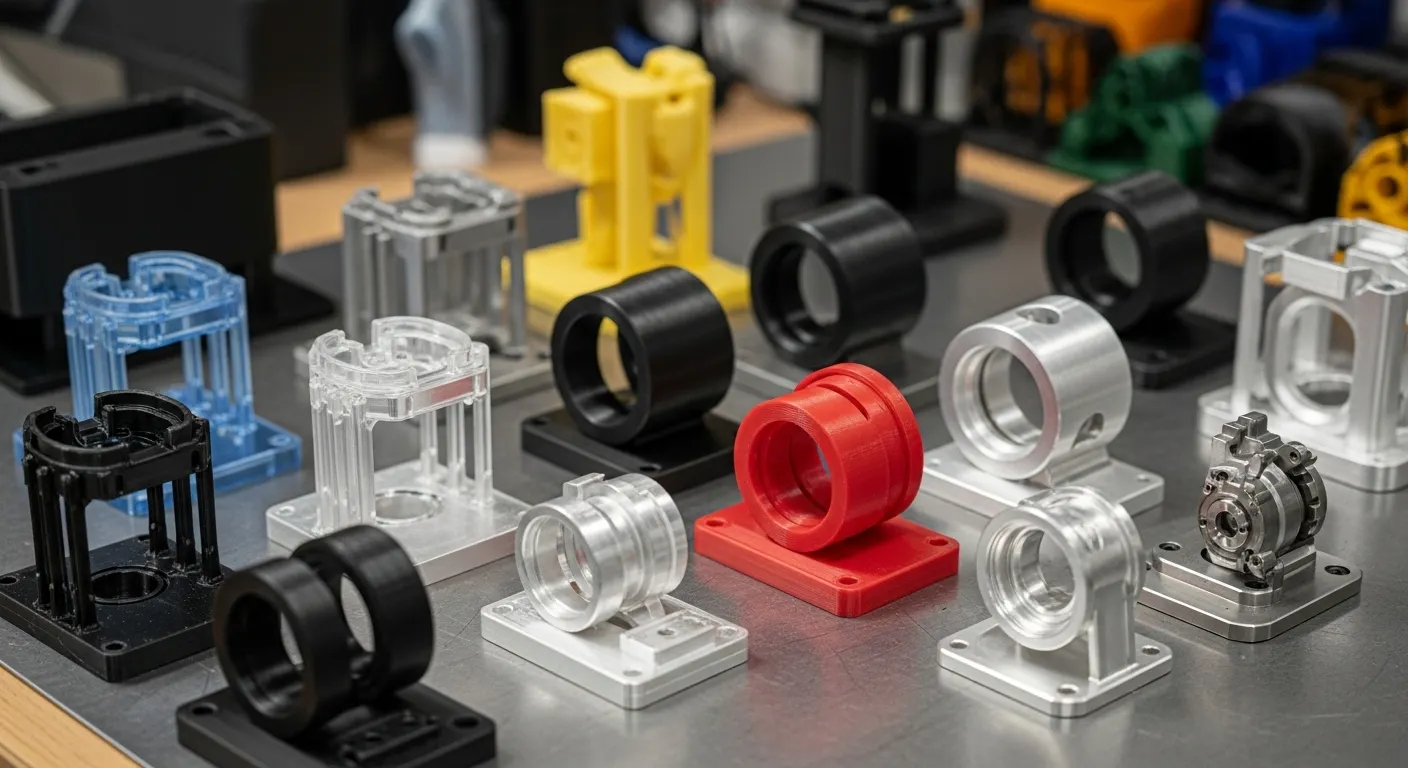
Use Cases Application Use Cases of Additive Manufacturing Prototypes
Prototyping additive manufacturing has become a common practice in manufacturing sectors that require high accuracy, speed, and testing capabilities.
- Additive Manufacturing Prototypes Aerospace
Low-volume parts of production and lightweight structural components have helped the aerospace industry to create fuel-efficient designs without jeopardizing safety. AM enables the fabrication of complicated shapes, including honeycombs, which weigh less but do not compromise strength.
- Car Additive Manufacturing Prototyping
Engineering prototypes via additive manufacturing are used in the automotive industry to lower the time of vehicle development. AM enhances the evolution of aesthetic concept models to prototypes of functional testing. Bespoke designs (3D printed prototypes) assist manufacturers in eliminating design flaws and maximizing performance with the aim of mass manufacturing.
- 3D printing of Medical Prototypes
The medical and dental industries use AM to create patient-specific devices, surgical tools, and functional prototypes in additive manufacturing. Polymer and metal prototypes are well tested and validated to enhance safety and reliability for the end-users.
- Prototypes in the Additive Manufacturing Industry
In the case of industrial applications, additive manufacturing provides prototype manufacturing services of complex machine components, industrial components, and tooling inserts. Its computer-aided manufacturing (CAM) integrates the dimensional accuracy and repeatability of its prototypes.
Quick Designing in Prototyping Technologies and Methodologies
Rapid prototyping systems take advantage of digital manufacturing processes to reduce the amount of time taken from design to prototype. Key methodologies include:
- Layer-By-Layer Fabrication: Can create parts directly from CAD files without the use of molds.
- Repeat Prototyping Steps: Assists in the development of a product using the agile methodology of constant testing and improvement.
- End-Use Functional Prototyping: Makes certain that prototypes are able to fulfill real-life mechanical and thermal needs.
- Tool-Less Production: Removes the expensive and time-intensive tooling systems.
The processes are essential to design for additive manufacturing that tailors online models to additive manufacturing to achieve structural integrity and performance efficiency.
Incorporating CNC Prototyping of Machining Aluminum
At GD Prototyping, we enjoy additive manufacturing with Aluminum Prototype Machining to provide greater precision and finish. Machining services that we offer:
- Processing Accuracy: + -0.005 mm tolerance.
- Axis: 3, 4, and 5-axis CNC machining.
- Surface Roughness: Fine finishing, which is industrial grade.
- Material Choice: 6061 and 7075, 2024, and other aluminum alloys.
- Single prototypes to small- batch production: Batch Capability.
- Finishes Available: anodizing, powder, bead blasting, and polishing.
This integration enables the production of custom additive manufacturing prototypes, high-precision additive prototypes, as well as hybrid parts that combine AM flexibility and CNC machining precision.
Additive Prototyping Future Trends
The prognosis of additive manufacturing is optimistic, and the digital techniques of fabrication and multi-material 3D printing prototypes are that the expansion of the possibilities of prototyping limits:
- Combination with AI and Generative Design: Optimizes component geometry in terms of strength, weight, and performance.
- Hybrid Manufacturing: Additive manufacturing combined with CNC and injection molding to produce the best prototypes.
- Sustainable Materials: Recycled metal and biodegradable polymers have lower environmental costs.
- Digital Inventory in Demand: The on-demand inventory lowers storage expenses and benefits just-in-time production.
These trends support the use of additive manufacturing in making precision-engineered prototyping, functional testing, and low-volume production parts, which satisfy industry standards.
Conclusion
In the modern high-throughput manufacturing world, the additive manufacturing prototypes offer the end solution to quick and efficient product development that is very precise. Since the technologies of rapid prototyping were introduced, additive manufacturing prototypes have been created with high precision, and AM combined with CNC machining guarantees that all prototypes are of the finest quality and performance. Aerospace, automotive, medical, or industrial needs, GD Prototyping is a complete service provider of additive prototypes, and your product development is quicker, smarter, and more creative than ever.
