


ABS Prototype Injection Molding | Rapid ABS Plastic Prototypes
ABS Prototype Injection Molding: Accuracy and Scalability of Innovation
In the current, high-paced product development environment, ABS prototype injection molding has been established as a bedrock technology by engineers, startups, and manufacturers requiring dependable, production-quality plastic components fast. Abs injection molding prototypes fill the gap between a concept and large-scale manufacture, whether you are validating a design, testing functional performance, or preparing to enter the low-volume market in a very cost-effective manner.
- In essence, ABS plastic prototyping represents a series of injection molding techniques that have developed using the technique of Acrylonitrile Butadiene Styrene material that is complemented by the precision of contemporary injection molding techniques.
- The outcome is long-lasting, tough, and dimensionally stable components that most closely resemble finished components. Relative to most of the rapid prototyping techniques, prototype injection molding ABS provides a better balance between mechanical performance, quality of surface finish, and repeatability.
Firms, such as GD Prototyping, deal with the transformation of design concepts into injection-molded ABS components that satisfy functional and aesthetic needs. They can enable companies to speed up the development process by combining high-speed tooling, low-volume injection molding, and sophisticated mold flow analysis without losing accuracy.
ABS as a Prototype Injection Molding Material
Acrylonitrile Butadiene Styrene (ABS) is a widely used thermoplastic in prototype production, and justifiably so. This thermoplastic ABS resin is a supreme combination of strength, toughness, and process ability, and, thus, it is the best to use in ABS for molding prototypes that are expected to stand up to the real test.
Injection Molding ABS Material Properties
In engineering terms, ABS provides a stable complex of mechanical properties:
- Even reduced temperatures High impact resistance.
- Excellent heat resistance, generally up to 80-100 deg C, by grade.
- Very good dimensional stability, which is important in tight tolerances.
- Stable quality of surface finish, as needed by cosmetic parts.
The rate of ABS shrinkage is usually between 0.4 percent and 0.7 percent in injection molding, and the mold design can be predicted to lead to precise production of prototype plastic parts. Molded ABS components in prototype parts can be used in thin wall and with minimal distortion when used in combination with good gate design of ABS molding and with controlled cooling.
Procedure of ABS Prototype Injection Molding
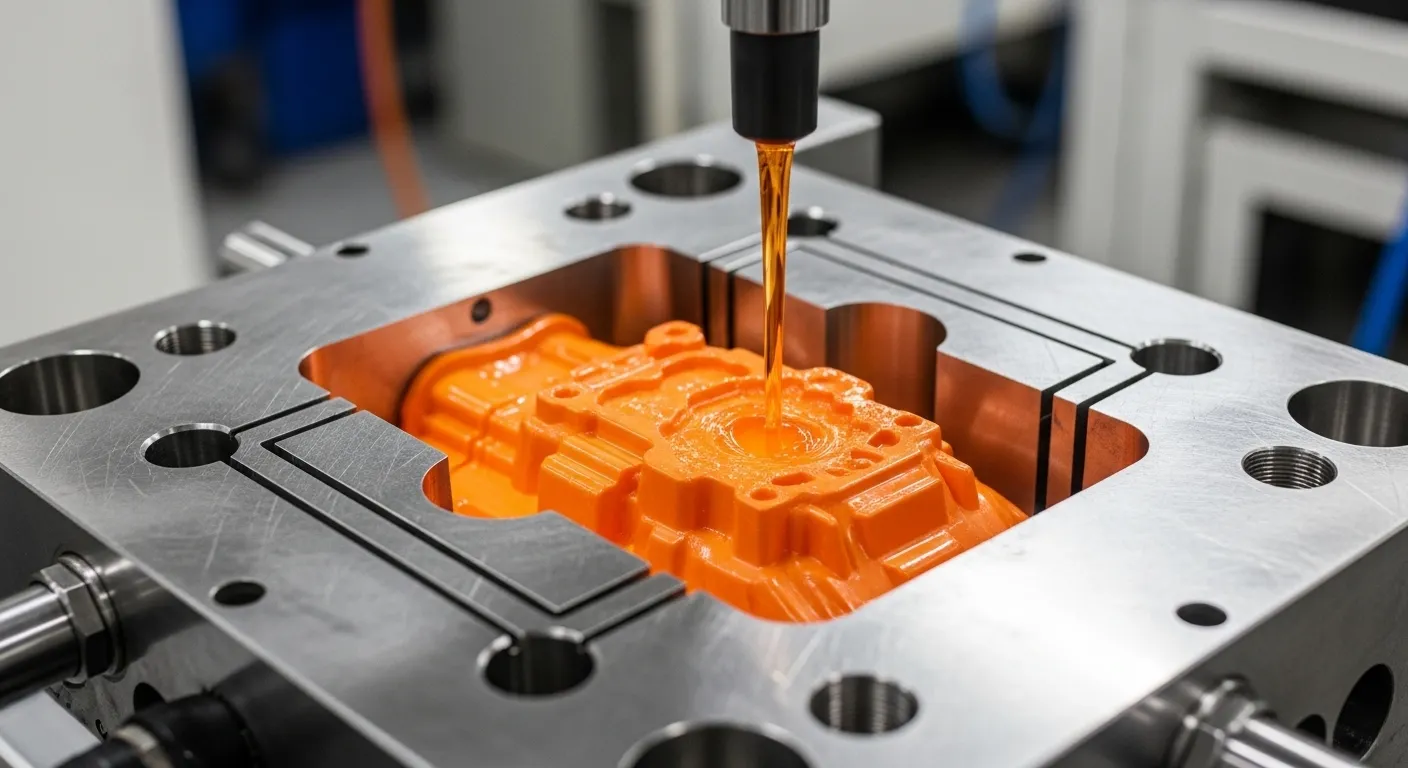
The manufacturing of ABS prototypes follows the same basic steps as the actual production, and in this way, the prototypes are an accurate representation of the final parts. This is among the major benefits of plastic prototype injection molding as compared to additive methodology.
Process Cycle of Step-by-Step Injection Molding
- Prototype Mold Fabrication
Rapid prototype tooling is made of aluminum or soft steel to minimize the lead time and cost.
- ABS Resin Injection Molding
ABS pellets are heated to a temperature of injection molding of about 210-260degC of ABS depending on the grade.
- Mold Filling and Packing
ABS is molten and passes through a carefully designed system of gates and runners to provide evenly filled cavities.
- Cooling and Solidification
Controlled cooling reduces the internal stresses as well as stabilizing geometry of parts.
- Ejection and Inspection
ABS components that are injection molded are ejected and checked in terms of dimensional accuracy and surface finish.
Highly sophisticated mold flow simulation can be applied to optimal filling behavior, sink marks are minimized, and uniform quality is maintained, particularly with high-precision molded prototyping.
High-Speed and Low-Volume ABS Injection Molding Solutions
Rapid ABS injection molding and low-volume ABS injection molding offer an intelligent substitute to conventional mass production to companies that require speed but want to avoid heavy investment in the tools used.
Why Rapid Tooling Matters
Quick tooling of the ABS injection molding enables manufacturers to make working ABS prototypes within weeks rather than months. Small batch ABS injection molding of 10 to 10,000 in number, depending on complexity, requires an aluminum mold, which has sufficient durability.
This approach supports:
- Fast ABS prototype molding
- Low-cost ABS prototype injection molding
- Recurrent design enhancements.
- Scientifically feasible plastic manufacture.
GD Prototyping can offer some flexibly production by incorporating on-demand injection molding, short-run plastic molding strategies, which increase with your project.
Design and Engineering of Tooling to Prototype ABS
Design of tools to be used in prototyping ABS demands extensive knowledge in the behavior of materials, the shape of the part, and processing.
Key Engineering Factors
- Positioning of gates to manage the flow directions and reduce the weld lines.
- Equal thickness of walls to minimize sink marks.
- Incident angles of convenient part ejection.
- Lauding channel to maximize cycle time to ABS injection molding.
Through the appropriate validation of prototype tooling manufacture can produce ABS parts, which will be used in production with confidence in their dependability under a mechanical load.
ABS Prototype Injection Molding Applications to the Industry
Due to its flexibility, ABS finds the broadest application in various industries where engineering-grade plastic prototypes are needed.
- Automotive Industry
ABS automotive prototype components are applied in dashboards, interior trims, brackets, and housings. During vibration and thermal testing, the impact-resistant plastic molding ensures longevity.
- Electronics and Enclosures
The ABS electronics enclosure prototypes are good because they have good surface finish quality and electrical insulation properties, hence useful in consumer electronics and industrial control units.
- Medical Devices
The ABS medical device prototypes are used to aid functional testing on housings, fixtures, and diagnostic equipment components where dimensional stability and repeatability are much needed.
- Consumer and Industrial Products
ABS consumer product prototyping and ABS industrial component prototyping enable manufacturers to test the applicability, durability, and look of their products before manufacturing in large volumes.
- Surface Finishes and Batch Capability
UV coating, vapor smoothing, and polishing increase the clarity and surface quality. Such techniques assist in supporting individual prototypes, such as small batch production, which is suitable for optical components such as lenses, light guides, diffusers, and inspection windows.
Why Use GD Prototyping with ABS Injection Molded Prototypes?
- Being a reliable collaborator in creating the custom plastic, GD Prototyping faces the control over all the steps of the process, starting with the design acceptance up to the last inspection. Their proficiency in precision plastic molding, prototype mold production, and ABS prototype tooling services guarantees predictable results of complicated work.
- Through scalable plastic production, small-scale plastic molding, and comprehensive knowledge of materials, GD Prototyping assists customers in the transition to full-scale manufacture of plastic components immediately after prototype plastic parts have been produced.
Conclusion:
ABS prototype injection molding is considered to be still one of the most potent instruments of product development these days. It also provides unprecedented precision, material response, and scalability -so it is best suited to functional tests, market validation, and low-volume production. With the technical accuracy and consumer orientation of GD Prototyping, your concepts can be transformed into molded prototypes of high precision and very suitable for the real world.
