


ABS Injection Molding Prototypes | High-Precision Prototyping
ABS Injection Molding Prototypes: Accurate and Fast Prototyping
ABS injection molding prototypes play a vital role in the modern competitive product development world in the transformation of ideas into items that can be developed further. The ABS plastic prototyping bridges the gap between concept and mass production by using early-stage design validation tests as pre-production testing.
- The engineers, startups, and old manufacturers prefer to use ABS prototypes that are injection molded because they are all-inclusive in a single manufacturing solution, in the areas of durability, accuracy, and cost efficacy.
- In GD Prototyping, they have provided high-technology ABS prototype injection molding services, which will be utilized in rapid prototyping, fine tolerances, and scalable manufacturing without sacrificing the high performance of their surface and materials.
What are ABS Injection Molding Prototypes?
ABS injection molding is a plastic molding process that incorporates the use of Acrylonitrile Butadiene Styrene (ABS), a highly popular thermoplastic engineering material in the modern manufacturing world. ABS is valued because it is not easily impacted, stabilizes heat, can support weight, and has an excellent dimensional stability; thus, it is capable of being used both in functional prototyping and in end-use components.
Unlike CNC-only prototyping, a prototype plastic injection molding is a procedure that generates prototypes that are commensurate with the final manufacturing environment. This will ensure that there is the appropriate testing of strength, fit, surface finish, as well as actual usage of the same.
The rationale behind why ABS Thermoplastic Material is the most suitable for prototyping.
- Tough high-strength plastic resin.
- Impact-resistant plastic is stress-resistant and impact-resistant.
- ABS heat-resistant material functional test.
- Powerful thermoplastic substances that are exceptionally repeatable.
These material attributes ensure ABS molded prototype parts are ideal for automotive, electronic, medical, and industrial purposes.
Explanation of the Plastic Injection Molding Process by ABS
ABS plastic injection molding process is similar to a procedure of heating ABS resin powder and forcing it into a designed and pressure-molded cavity.
Key Process Parameters
- Injection molding of ABS temperature: 200-260 degC.
- ABS plastic injection pressure: adjusted to have no sink marks and no voids.
- ABS: Melt flow index: it establishes the performance of flow and the complexity of parts.
- ABS shrinkage rate: 0.4 per cent -0.7 per cent (generally) and plays a critical role in dimensional accuracy.
Injection Molding Prototypes Tooling by ABS
The successful prototype production of the ABS relies on tooling. The prototyping and small-scale production can be done using an aluminum or soft steel mold, and the lead-time is reduced significantly, as well as the cost.
Tooling Options
- BMW had been machined in injection molds.
- Moulds of design prototypes- Rapid cycle.
- Optimization of short-run molding tooling.
- Scalable production bridge-tooling.
In the GD Prototyping tooling, is such that it is suitable to high challenge molding, and the repeatability of parts is ensured even in low-volume projects of ABS injection molding.
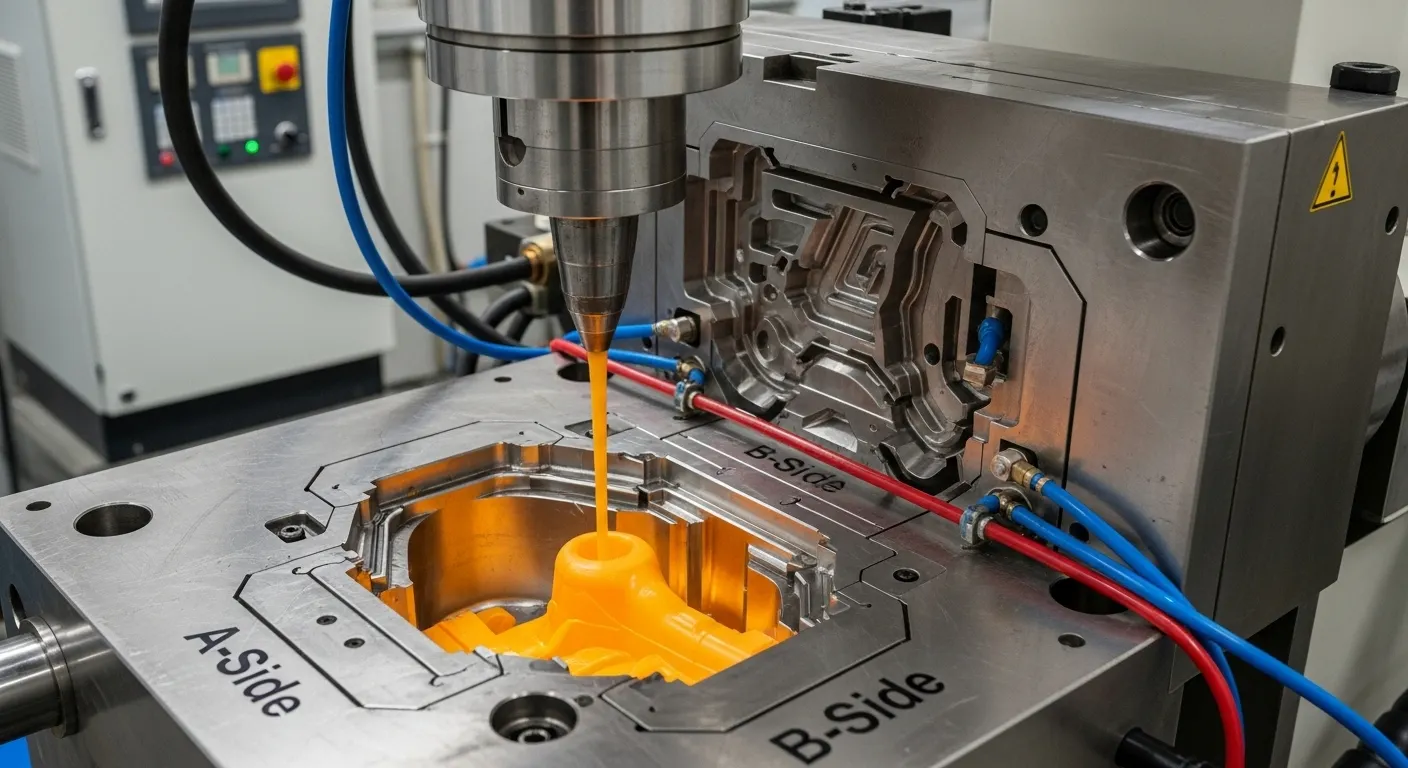
ABS to Product Development Fast Injection Molding
Competitive markets are time sensitive. Rapid injection molding of ABS enables manufacturers to transform the CAD information into actual components in a matter of days, compared to months.
Benefits of Rapid ABS Prototyping
- Fast-turnaround prototyping
- Un-tooled short-run molding.
- Reduced development risk
- Lower cost per iteration
The practice is particularly effective in start-ups and research and development projects where a prototype of ABS has to be produced on demand without necessarily having to invest in full-scale production equipment.
Small Batch and Low-Volume ABS Injection Molding
All projects require mass production. Low-volume ABS injection molding and small batch ABS injection molding allow companies to experiment in the markets, test designs, and perfect products inexpensively.
Ideal Use Cases
- Pre-production prototypes
- Design check and manufacturing practical test.
- Functional plastic testing
The processes are flexible and ensure the quality of production grade.
Surface Finishes, Precision, Tolerances, and Quality
Among the largest advantages of injected prototyping, it could be stated that it is possible to achieve micron-level precision and quality surface finishes.
Quality Control Factors
- The ABS prototype's tolerance.
- Dimensional consistency and dimensional accuracy.
- Manufacturing of ABS molded parts.
- Movable parts with molded parts that have no defects.
The design prototypes are inspected to meet the strict mechanical and aesthetic requirements, especially of the products that will fulfill the needs of the consumers.
ABS and Transparent Plastic Optical Prototyping
Many prototyping applications have used clear plastic components due to either clarity of optics, visual accessibility, or a more appealing appearance. The optical prototyping may be especially applied in light transmission tests, observing the internal process, or the final product result.
Optical Prototyping Capabilities
- Tolerance: Lenses and components Micro tolerance.
- Surface Finish: Optical quality surface polishing with little roughness.
- Materials: Crystal materials, optical glass, acrylic (PMMA), polycarbonate (PC).
Optical prototyping has been used in some materials, including acrylic and polycarbonate, due to their transparency and machinability. Acrylic is highly translucent and transparent compared to polycarbonate, which is more impact-resistant but slightly less transparent.
Application of ABS Injection Molded Prototypes
There has been an increase in the use of ABS plastic parts in the industries due to their weight, strength, and appearance.
Industry Applications
- Agricultural (interior trims, housings) plastic prototypes.
- Electronic casing of customers.
- Medical equipment enclosures are made of plastic.
- Industrial equipment companies.
- Prototypes Electric casing.
- Designing tailor-made plastic items.
The ready prototypes of the production help in the process of transferring the prototype into the full scale production.
Conclusion
The ABS injection molding prototypes that offer the speed, accuracy, and scalability of a single potent manufacturing solution form the basis of modern product development. This has been established to ensure confidence until full-scale production, whether you need massive injection molding of ABS, small-scale production, or ABS prototyping of high-precision. It is a combination of high-tech tooling, engineering design, and reliable custom ABS injection molding to enable you to take your ideas to the market faster, smarter, and at a lower cost with the assistance of GD Prototyping.
