


Titanium vs Steel: The Ultimate Comparison of Hardness, Strength, and Weight
How These Two Critical Metals Stack Up — Insights for Engineers, Designers, and Manufacturing Buyers
When selecting a material for precision parts and high-performance components, designers and engineers often find themselves choosing between titanium and steel. Both metals have a long history in industrial applications, yet they offer very different property combinations that affect performance, weight, cost, and manufacturability. Understanding these differences is essential for informed material selection — whether you’re engineering aerospace components, medical devices, or rugged industrial parts.
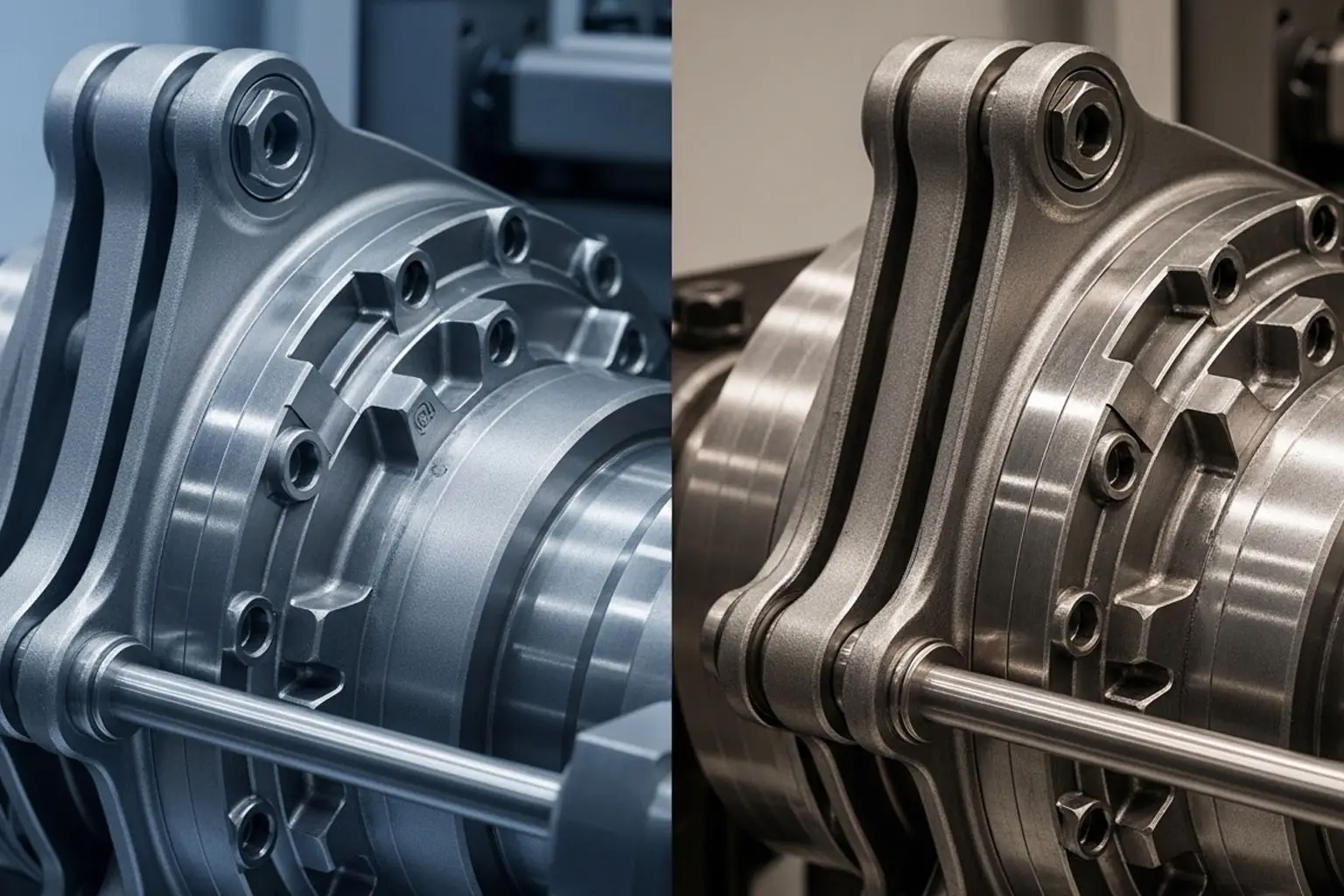
In this article, we’ll break down how titanium and steel compare in terms of hardness, tensile strength, density (weight), corrosion resistance, and practical applications — especially in the context of precision manufacturing and CNC machining.
What Are Titanium and Steel?
Titanium is a transition metal known for its excellent strength-to-weight ratio, corrosion resistance, and ability to perform in extreme environments. It remains relatively light yet strong compared to many structural metals.
Steel, on the other hand, is an iron-based alloy (often with carbon and other elements) that has been engineered into countless grades — from low carbon structural steels to high-strength tool steels — offering a broad range of mechanical properties and prices.
Density & Weight: Titanium Is Noticeably Lighter
One of the most striking differences between titanium and steel is density.
-
Titanium has a density of approximately 4.5 g/cm³, making it about 45–56% lighter than steel for the same volume of material.
-
Steel typically has a density close to 7.8–7.9 g/cm³.
This lower density means that titanium can deliver similar strength with significantly reduced weight, a crucial factor in applications where every kilogram matters — like aerospace, high-performance automotive, or portable equipment.
Strength: Absolute vs. Specific
When evaluating mechanical strength, it’s important to consider both absolute strength and strength relative to weight.
-
Absolute tensile strength: Certain high-grade steels (especially alloy and treated steels) exceed the tensile strength of typical titanium alloys. High-strength steels can reach tensile strengths beyond 1,500 MPa, whereas common titanium alloys like Ti-6Al-4V often range around 900–1,100 MPa.
-
Strength-to-weight ratio: Titanium typically outperforms steel when you measure strength per unit of weight — also known as specific strength. This means per kilogram of material, titanium often carries more load before failure than heavier steels.
In many engineering decisions — especially where weight savings drive performance or efficiency — titanium’s high specific strength can be a decisive advantage.
Hardness & Wear Resistance
Hardness influences wear resistance and how a material behaves during machining or in service:
-
In general, steel alloys — especially hardened tool steels — can achieve higher hardness levels than titanium. Steels used in tooling or structural applications often exceed the hardness of titanium alloys.
-
Titanium alloys like Ti-6Al-4V achieve respectable hardness (~330–400 HV) but typically remain softer than many hardened steels.
For many CNC machining applications, this means steel can often be easier to work with regarding cutting edge retention and surface finish, although advanced machining practices are frequently required for both.
Corrosion Resistance
Titanium’s corrosion resistance is generally superior to plain carbon or many stainless steels:
-
Titanium naturally forms a stable oxide layer that protects it from a wide range of corrosive environments, including seawater and acids.
-
While stainless steel also offers corrosion resistance, it can be less effective in highly aggressive environments unless specialized alloys are used.
This makes titanium appealing for marine equipment, chemical processing, and biomedical components where long-term environmental exposure is a concern.
Machinability & Manufacturing Considerations
Both materials pose machining challenges, but they differ:
-
Steel is generally easier to machine and process with traditional methods, especially in grades designed for machinability.
-
Titanium can be more difficult to machine due to its low thermal conductivity and tendency to work-harden, requiring specialized tooling and coolant strategies.
At GD Prototyping Technology (Dongguan, China), our CNC machining expertise enables precise machining of both titanium and steel parts, even in complex geometries or tight tolerance scenarios.
Real-World Applications
Here’s how the differences influence material choice in common applications:
Choose Titanium When:
-
Weight reduction is critical (e.g., aerospace components, high-performance vehicles).
-
Corrosion resistance and durability are paramount (e.g., medical implants, marine parts).
-
Strength-to-weight performance outweighs cost considerations.
Choose Steel When:
-
Absolute hardness, wear resistance, or budget are key factors.
-
Large structural components or mass production drives cost efficiency.
-
Applications require high rigidity and comparatively simple machining.
Conclusion
Both titanium and steel bring formidable strengths to engineering and manufacturing. Steel generally offers higher absolute strength, hardness options, and cost advantages, while titanium shines with exceptional strength-to-weight ratios and corrosion resistance.
At GD Prototyping Technology, we provide precision prototyping and production solutions for both materials — helping you choose the right metal based on performance requirements, cost targets, and application environments.
Whether you’re machining high-strength steel components or ultra-light titanium parts, understanding these material trade-offs ensures better design outcomes and optimized manufacturing performance.
