


What Is the Difference Between Resin and Plastic? A Practical Guide for Designers & Manufacturers
Understand key differences between resin and plastic, how they’re used in prototyping, production, and material selection.
Every product designer, engineer, and manufacturing buyer has encountered two common material terms — resin and plastic. While these words are often used interchangeably, they represent distinct concepts in materials science and production engineering. Choosing the right material impacts manufacturability, performance, cost, and end-use quality — especially for prototyping and custom manufacturing. (polymerprocessingguide.com)
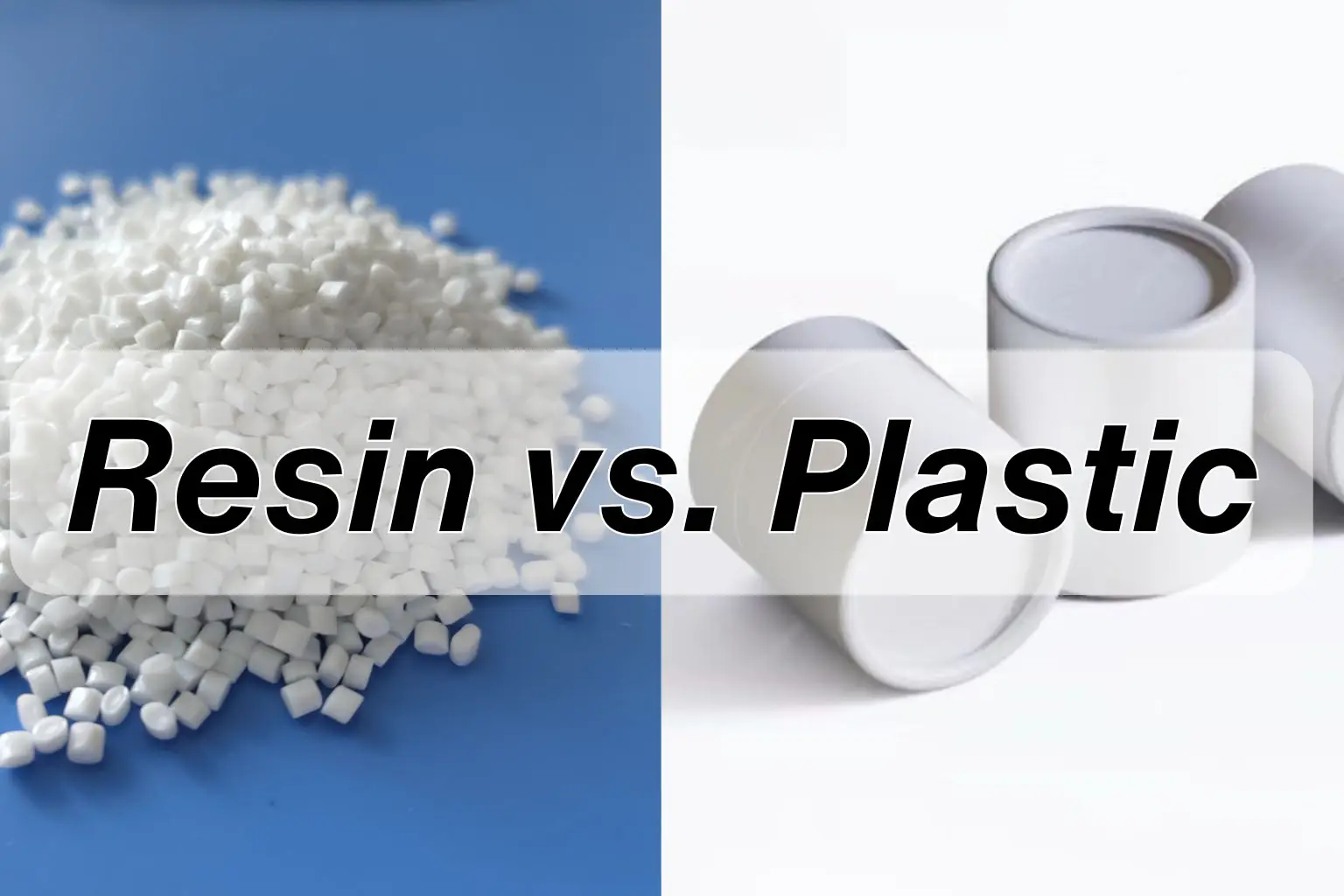
In this article, we’ll clarify what resin and plastic actually are, how they differ in properties and applications, and how to make smarter material choices for components whether produced by injection molding, 3D printing, CNC machining, or hybrid manufacturing processes.
What Are Resin and Plastic?
Resin is a broad term for organic compounds — natural or synthetic — that are typically viscous, polymer-forming liquids or solids. Resins may be processed into plastics, adhesives, coatings, and composites. Many 3D printing workflows rely on photopolymer resins cured by light. (materialsbasic.com)
Plastic, on the other hand, refers to polymer materials that can be shaped or molded into finished parts. Plastics often originate from resin feedstock but are specifically engineered for thermoplastic or thermoset behavior in manufacturing processes. (chemonet.com)
Put simply:
-
Resin: Raw or semi-processed polymer material
-
Plastic: Finished or usable polymer product
Chemical and Structural Differences
Resins form the backbone of plastic chemistry. Many plastics begin as resin pellets, powders, or liquids that undergo heat, pressure, or curing to become final materials.
Types of Resin:
-
Thermoplastic resins — soften when heated and harden when cooled.
-
Thermosetting resins — chemically “set” and do not melt again once cured.
Types of Plastic:
Plastics include families such as:
-
PE (Polyethylene)
-
PP (Polypropylene)
-
ABS (Acrylonitrile Butadiene Styrene)
-
PC (Polycarbonate)
-
PA (Nylon / Polyamide)
-
PMMA (Acrylic)
These are engineered for specific mechanical, thermal, and chemical requirements. (polymerprocessingguide.com)
How Resins Become Plastics
The conversion from resin to plastic typically involves one of these processes:
🔹 Melting & Molding
Thermoplastic resins melt at elevated temperatures and are shaped by injection molding, extrusion, blow molding, or thermoforming.
🔹 Curing
Thermosetting resins are mixed with hardeners or catalysts and cured under heat or UV light, forming rigid structures common in composites and certain 3D printed parts.
In both routes, resin transforms from a raw polymer feedstock into a stable plastic part.
Performance Differences
Though related, resin and plastic differ in key performance dimensions:
1. Mechanical Properties
-
Plastics are engineered for tensile strength, impact resistance, flexibility, or rigidity depending on polymer type.
-
Unprocessed resins have limited strength until they’re formed or cured.
2. Thermal Behavior
-
Thermoplastics can be reheated and reshaped.
-
Thermoset plastics remain rigid once cured.
Understanding this helps in selecting materials for functional parts such as housings, gears, and moving components.
Resin vs Plastic in Manufacturing
Both resins and plastics see widespread use in manufacturing — but they serve different roles:
3D Printing & Additive Manufacturing
-
Photopolymer resins are essential in SLA and DLP printing for fine-detail prototypes.
-
Plastic filament (like ABS, PLA) is used in FDM printing for rapid prototypes and tooling concepts.
Injection Molding
Plastic resins are melted and injected into steel molds to produce consistent, high-volume components — a process GD Prototyping offers for custom parts. Resin in this context refers to the plastic pellets as feedstock.
CNC Machining
Solid plastic billets (e.g., nylon, acetal, Delrin) are machined by CNC tools. These plastics originated from resins that were processed into stock shapes before machining.
Choosing Between Resin and Plastic
Material selection depends on end-use requirements:
Choose Resin When:
-
You need fine detail or surface finish in SLA or DLP 3D printing.
-
Prototyping requires complex internal features before tooling production.
-
Your application benefits from rapid curing and fast iteration.
Choose Plastic When:
-
You need functional performance in final parts (e.g., strength, wear resistance).
-
Manufacturing via injection molding or CNC machining.
-
Components require thermal or chemical stability.
Why Material Clarity Matters
Confusing resin with plastic can lead to mismatches in performance or manufacturing processes. Resin is the raw polymer base, while plastic is the engineered product applied in real-world components. Understanding this difference enhances design decisions and production outcomes — especially when precision, reliability, and cost efficiency matter.
Conclusion
Resin and plastic are closely linked but fundamentally different concepts in materials science. Resin describes raw polymer material, while plastic refers to the finished, engineered product used in parts and assemblies. In modern manufacturing — spanning additive production, injection molding, and CNC machining — both have important roles.
At GD Prototyping Technology (Dongguan, China), we support material selection, prototyping, and production of resin-based parts and plastic components across industries including automotive, electronics, medical devices, industrial equipment, and more.
Understanding these material differences empowers engineers and manufacturers to optimize part performance, production efficiency, and overall product success.
