


The 6061 Aluminum Rapid Prototype Guide: What You Need To Know
Starting a new product? One of the first big choices you'll face is picking the right material for your 6061 Aluminum Rapid Prototype. Get this choice right, and your prototype will behave just like the final product. Mistakes lead to costly repairs, disrupted timelines, and an inadequate product.
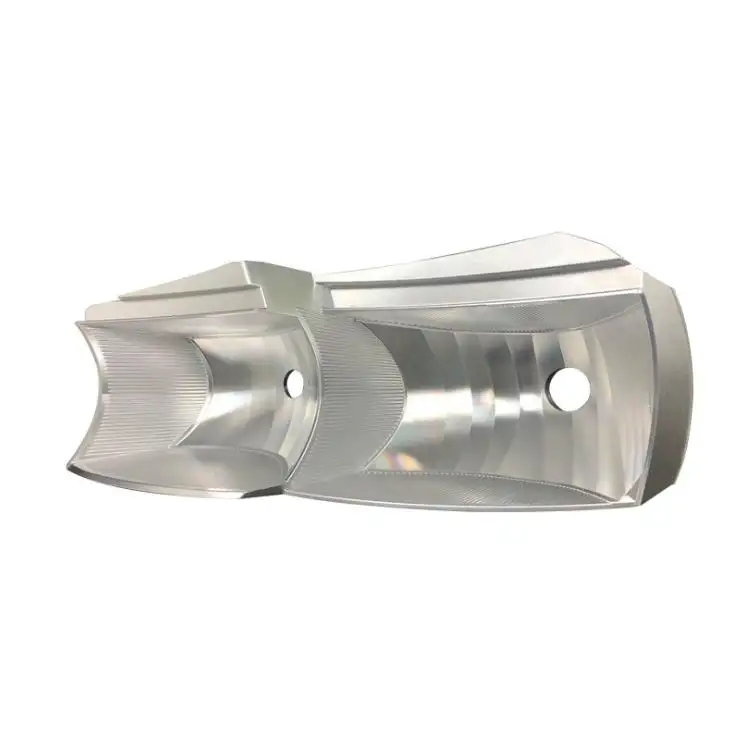
This guide covers the reasons technicians love 6061 aluminum – especially for prototypes – how it compares with other metals, projected costs, and what to expect in 2026.
What is 6061 Aluminum?
Aluminum 6061 is the “jack of all trades” aluminum alloy. It is a heat-treatable alloy and a common material for functional prototypes. It is made with magnesium and silicon and has a strength-to-weight ratio and is easy to machine and resistant to corrosion.
After it has been heat treated (T6 tempering), 6061 aluminum is strong, lightweight (a third the weight of steel), and is strong enough for car components (or robot arms!). It is also easy for machines to cut it precisely and quickly.
What are three practical reasons that 6061 makes prototyping faster?
•6061 aluminum combines and handles heat very well. This makes it great for electronics boxes or LED housings.
•It has a small thermal expansion coefficient. This means your components will not distort in size over time or during use.
•6061 aluminum is a decent conductor of electricity. This makes it good for electrically housings for grounding and shielding.
•6061 aluminum is a great choice for the automotive industry, and is used for real-life prototyping or real-world testing because it can survive over 200,000 back and forth cycles.
How 6061 Aluminum Compares to Other Aluminum Alloys?
Aluminum, as a whole, has a wide variation in quality range. Each alloy has a different personality. Here's a simple breakdown:
| Alloy | Strength | Best For | Downside |
| 6061 | Good (275–290 MPa) | Everyday prototypes, general parts | Not exceptional in anything, but solid everywhere |
| 7075 | Very high (480–510 MPa) | Airplane parts, race car components | Expensive and hard to weld |
| 2024 | Good (280–300 MPa) | Parts that bend repeatedly (aircraft wings) | Rusts easily without coating |
| 5083 | Moderate (~165 MPa) | Boat parts, chemical tanks | Lower strength, but almost never rusts |
The simple rule of thumb:
Pick 6061 for most jobs—it's strong, easy to machine, weldable, and affordable.
Pick 7075 only when you absolutely need the highest strength-to-weight ratio (like for competition drones or aerospace).
Pick 5083 if your prototype will live in salt water or harsh chemicals.
As one industry guide put it: "6061 wins for most jobs—good strength, great machining, decent corrosion, low price." That's exactly why automotive, robotics, and electronics teams use it every day.
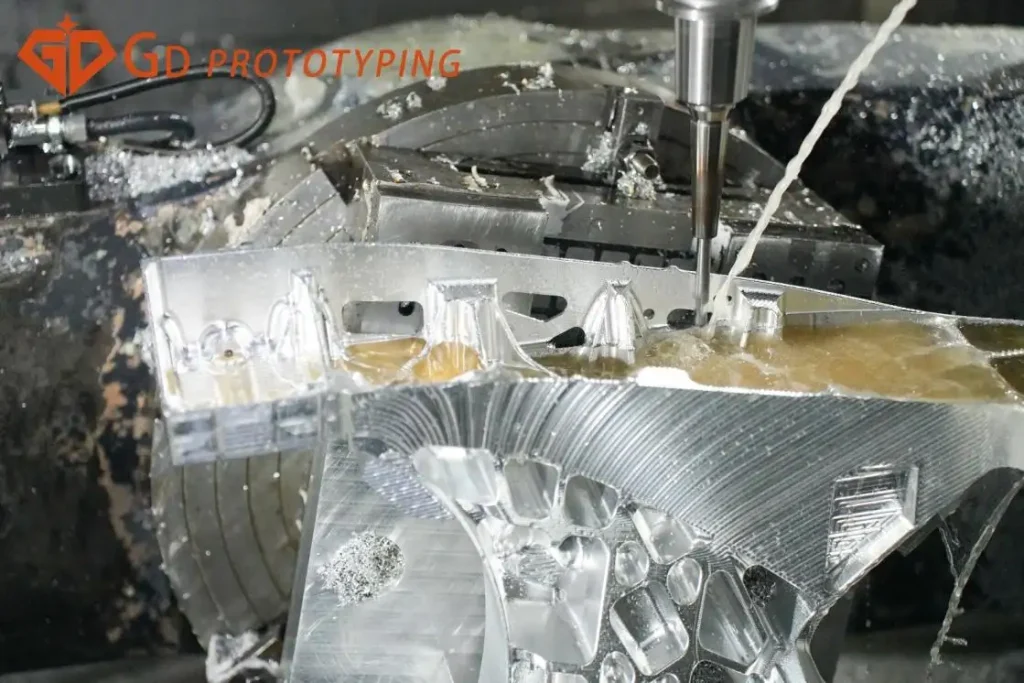
Two Ways to Make Your 6061 Aluminum Prototyping
How your prototype is made matters just as much as what it's made from. Here are the two main methods, explained simply.
1) CNC Machining (cutting from solid metal)
•What it is: Computer-controlled machines carve your part from a solid block of 6061 aluminum
•Surface feel: Smooth and ready for bright colors (anodizing)
•Toughness: Parts bend instead of breaks—very forgiving
•Cost breakdown: High initial cost for setup, but each extra part is cheap once the machine has been setup
✅ Best for: Most parts having simple to moderate shapes, especially if you are looking to produce dozens and hundreds after
2) Metal 3D Printing (AlSi10Mg)
•What it is: A printer builds your part edit layer by layer using aluminum powder
•Surface feel: Rough and dark gray
•Toughness: Hard and brittle
•Cost breakdown: No setup cost, but each part comes with a higher cost for the aluminum powder
✅ Best for: Very complex inner working parts or designs that cannot be cut from a simple block
Real world difference you'll notice: A CNC machined 6061 prototype can be bent, welded, or re machined later. Its smooth surface takes bright anodized colors beautifully. A 3D-printed aluminum part will turn dark gray when anodized and may snap if you try to bend it.
For most engineering teams making parts to test and validate, CNC-machined 6061 is the safer, more predictable choice—especially if your goal is to eventually go into production.
How Much a 6061 Aluminum Rapid Prototype Cost?
Let's talk money. Your total cost breaks down like this:
Total = Material + Machine Time + Setup Fee + Finishing
Here are real 2026 price ranges from prototyping shops (in USD):
•Material cost: 3–8 per kilogram – very cheap compared to other metals or high-end plastics
•Setup and programming: This is the biggest single cost, typically 50–300 per part. It often eats 40–60% of your total budget
•Machining time: Simple 3-axis work runs 15–40 per hour; complex 5-axis work runs 30–60+ per hour
•Finishing: Anodizing adds 10–30; bead blasting (a matte finish) adds 5–15
Examples to give you a ballpark:
•A simple bracket (100–200mm size, standard tolerance): 40–150
•A medium-complexity part with holes and multiple features: A complex precision part (very tight tolerances, tricky shapes): 300–1,000+
✅ Pro tip: Order 3–5 units at once instead of one now and one later. The difference between 1 unit (300total)and10units(650 total) drops your per-unit cost from 300tojust65.
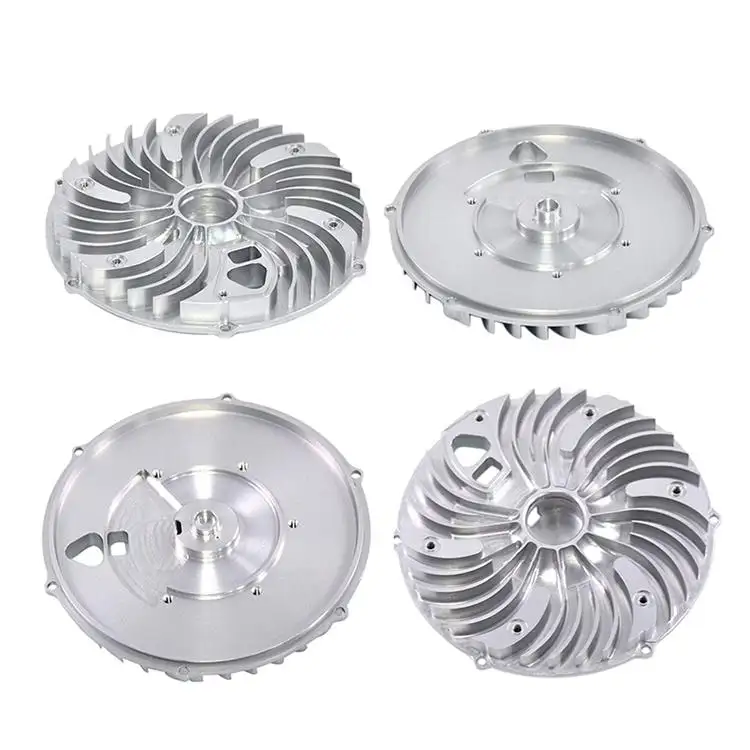
Where 6061 Prototypes Are Used (And How AI Helps)
Automotive labs, robotics engineers, consumer electronics designers, and medical device makers all rely on 6061 aluminum prototypes daily. Automotive uses: drivetrain parts, suspension brackets. Robotics: grippers and manipulators. Electronics: heat sinks and cases. Medical: surgical tools (to ISO 10993).
Prototyping is being reshaped by what AI can do. By 2026, design tools based on AI will be able to create hundreds of design variants that are optimized based on their strength and weight and cost. Feasibility checks will occur instantly, looking for bad tool paths or walls that are too thin, all before machining even starts. Virtual testing predicts heat and stress performance without cutting metal.
The result? Old workflows tested 3–5 designs in six weeks. AI explores hundreds of options in hours. One team cut a drone part’s weight by 70% while keeping it twice as strong. For you, that means fewer physical prototypes. Problems like cracks or warping get caught on a screen—saving weeks and thousands of dollars.
Why Choose GD Prototyping for Smarter 6061 Aluminum Prototypes
In 2026, smart product teams don’t just want speed—they want a partner who thinks ahead. GD Prototyping delivers exactly that for your 6061 Aluminum Rapid Prototype. Here’s how we help you build better parts, faster:
1) Tighter tolerances, fewer surprises
Our CNC machines hold ±0.005 mm—twice as accurate as the industry standard (±0.01 mm). Your parts fit and work the first time.
2) Free DFM check before cutting
Upload your CAD file. Within hours, we flag problem areas (thin walls, sharp corners) that could ruin your prototype. No guesswork.
3) One prototype or one thousand, same process
Many shops stop at single parts. We scale seamlessly. Use the same equipment and pricing from 1 unit to 1,000 units. Your per-part cost drops as volume grows.
4) Clear, honest pricing
Setup and programming are only 20–30% of your total—well below the industry’s 40–60%. No hidden fees.
5) Ready-to-finish surfaces
Our standard 6061 finish (0.8–1.6 µm Ra) takes anodizing or coating without extra polishing.
6) Real-world example
One customer needed a suspension bracket. Competitors quoted ±0.1 mm and 15 days. GD Prototyping delivered ±0.008 mm in 7 days—then ran 200 production units at 40% lower cost.
You can’t test what you haven’t built. With GD Prototyping, building your 6061 Aluminum Rapid Prototype is simpler, smarter, and more affordable than ever.
Final Words
Ready to move forward? Most prototyping shops can deliver a simple 6061 part in 3–5 business days. Upload your CAD file to get a quote and a free DFM (Design for Manufacturing) review before you commit.
Frequently Asked Questions (FAQs)
Q: How quickly can I get a 6061 aluminum rapid prototyping from GD Prototyping?
A: Rush service can get you simple parts within 3–5 business days. In extreme cases, on-time delivery for custom parts with tight tolerances can be expected to be within 7–10 days.
Q: Is there a minimum order quantity?
A: Not at all. The minimum order is 1 piece. The same CNC setup applies for a single prototype or a production run that includes thousands of pieces.
Q: What file types are accepted to receive a quotation?
A: STEP (.stp), IGES (.igs), SolidWorks (.sldprt), and STL files. CAD files can be submitted for a no-cost, no-obligation DFM analysis.
Q: Will you provide coatings, finishes, and anodizing on my 6061 prototyping?
A: Yes, we do Type II and Type III anodizing, bead blasting, powder coating, and passivation. All services are done in-house.
Q: How does your precision measure up to other shops?
A: The industry standard for general shop tolerances rests on 6061 features +/– 0.01 mm; for GD Prototyping, that standard is +/– 0.005 mm.
