


Why Are 5 Axis Machined Parts Better for Tight Tolerances?
The 5 Axis Machined Parts are quickly becoming the go-to choice for teams that cannot compromise on tight tolerances and stable quality. At GD Prototyping, we see this shift as complex components move from CAD models to real, assembled products. In this article, we'll walk through why 5 Axis Machined Parts are so effective for precision work, how they help fix common production headaches, and what it looks like to work with GD Prototyping from prototype through to end-use production.
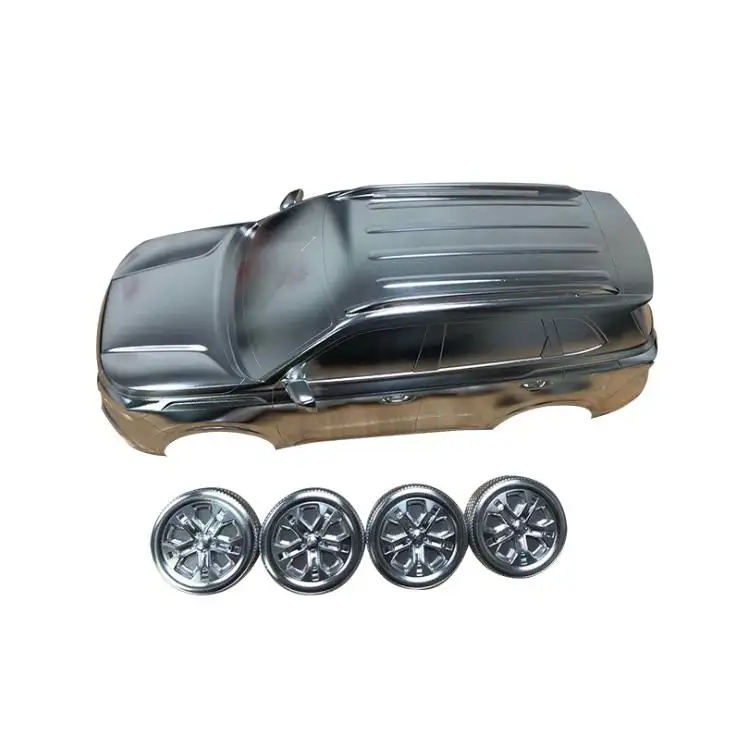
Why Tight Tolerances Need 5 Axis Machined Parts
When people talk about "tight tolerances," they often think only of numbers on a drawing. In reality, those numbers represent how smoothly parts fit together, how long the product runs without failure, and how repeatable your assembly process is from batch to batch.
As tolerances get tighter, small details suddenly matter a lot: how the part is clamped, how often it is re-positioned, how stable the cutting tool is, and how consistent the machine setup stays over time.
This is where 5-axis machining brings a real advantage.
Traditional 3-axis machining often needs multiple setups. The part is removed, rotated, reclamped, and re-zeroed again and again just to reach all the faces and features. Each time that happens, a tiny positioning error is introduced. Over a whole part, those tiny errors stack up and can push key dimensions out of tolerance.
With 5 Axis Machined Parts, many of those extra steps disappear. The machine can tilt and rotate the workpiece while cutting, so features on different faces are machined in one continuous setup. That leads to:
✅Fewer clamping operations
✅Less chance of misalignment between features
✅Much smaller tolerance stack-up across the part
At GD Prototyping, our 5-axis CNC milling centers are tuned for high-precision work. For critical dimensions, we can hold tolerances down to around ±0.05 mm, and we can achieve surface roughness close to Ra 0.2 μm on suitable materials and geometries. This level of precision is vital for sealing surfaces, tight-fit bores, and alignment features where even a small deviation can cause leaks, vibration, or assembly problems.
When you combine accurate machines with solid fixtures and skilled operators, the result is 5 Axis Machined Parts that do not just pass inspection once - they keep fitting and performing reliably over the life of the product.
From Drawings to Real-World Fit
A drawing may show a simple hole or slot, but in production that feature might sit at an angle, run across multiple faces, or align with other parts in a complex assembly. If those features are machined in separate setups, even a small shift can mean the parts no longer line up.
By machining related features in a single coordinate system, 5-axis machines help keep the real-world geometry closer to the original design intent. That means assemblies go together more smoothly, there is less hand fitting, and your team spends less time troubleshooting "mystery" misalignments that come from process variation, not from design errors.
How 5 Axis Machined Parts Solve Common Production Pain Points
When new customers come to us at GD Prototyping, they often describe the same set of frustrations:
•Holes that should align but don't when parts are assembled
•Parts from different batches that fit slightly differently, even with the same drawings
•Complex components that require multiple suppliers and long coordination times
•Switching these projects to 5 Axis Machined Parts often removes several of these roadblocks at once.
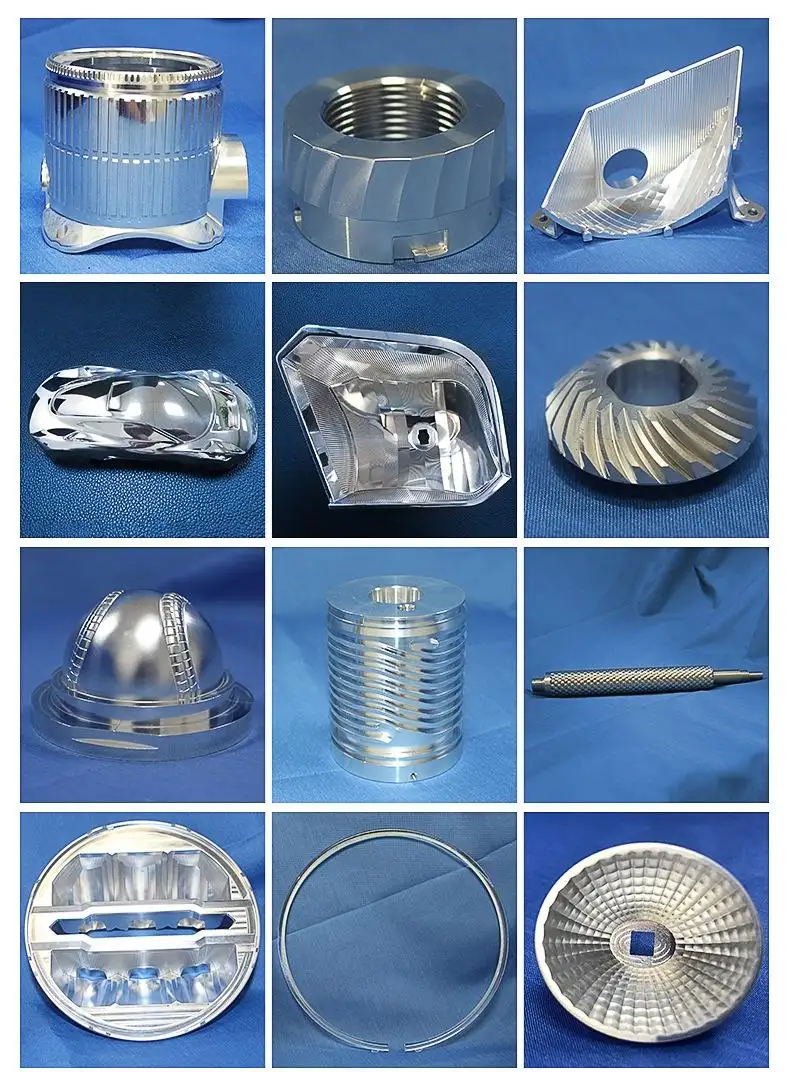
Higher Accuracy with Fewer Setups
Parts with undercuts, angled ports, turbine-style blades, or intricate pocketing usually push 3-axis machines to their limits. To reach every feature, the part may need custom fixtures, manual repositioning, or even partially hand-finished areas.
On a 5-axis machine, we can tilt and rotate the part so the cutting tool approaches each area at an optimal angle. Many challenging features can then be machined in one operation instead of several. This provides clear benefits:
✅Better positional accuracy between mating features
✅Improved roundness, straightness, and flatness on critical surfaces
✅Less rework, scrap, and inspection time on complex parts
In practice, this also shortens lead time. With fewer setups and fewer fixtures to build, the overall process becomes simpler, even if the part itself is complicated. That is why 5 Axis Machined Parts are often the most cost-effective choice for high-value or high-precision components, especially in aerospace, robotics, medical devices, and automation equipment.
Consistent Quality Across Different Materials
Tight-tolerance work becomes even more challenging when a project involves multiple materials. Aluminum, stainless steel, titanium, and engineering plastics all cut differently. They expand and contract at different rates. They respond differently to heat and tool pressure.
Because 5-axis machining reduces the number of times a part is unclamped and repositioned, it also reduces variation caused by internal stresses and clamping forces. At GD Prototyping, we operate 3-axis, 4-axis, 3+2-axis, and full 5-axis milling centers, plus CNC turning, all under one roof. That lets us choose the best process path for each material and geometry, rather than forcing everything through a single type of machine.
For you, this means the first prototype and the 500th production part can share the same tolerance strategy and deliver the same fit and function. You are not "starting over" every time volume increases; instead, you are scaling a stable, proven process built around 5 Axis Machined Parts.
Partner with GD Prototyping for Your Next Tight-Tolerance Project
Machines matter, but they are only part of the story. To get the full benefit of 5 Axis Machined Parts, you also need fast communication, clear feedback on manufacturability, and reliable delivery.
At GD Prototyping, we support your project through every stage:
•Rapid Prototyping - We turn your 3D models into physical parts that closely match the final design in both look and function. You can test assemblies, check clearances, and validate performance before committing to larger runs.
•Low-Volume Production - When you need more than a handful of samples but are not ready for full tooling, we use flexible CNC machining and 5-axis capability to bridge the gap. You receive production-quality parts with tight, repeatable tolerances - without the burden of high initial tooling costs.
•End-Use Production - For ongoing volumes in the hundreds or thousands, we rely on 24/7 in-house capacity, controlled workflows, and disciplined quality checks to make your supply chain more predictable.
During our collaboration, you benefit from:
✅Direct engineering support, usually within 12 hours of your inquiry
✅Around-the-clock machining capacity to handle rush orders and design changes
✅Extensive material choices and surface finishes, tailored to both technical and cosmetic requirements
If you are developing a new assembly, revisiting a legacy component, or trying to stabilize tolerance-sensitive features, 5 Axis Machined Parts can help you lower risk and improve long-term reliability.
Call to Action
Provide GD Prototyping with your CAD files and tolerance requirements. We'll help you determine where 5-axis machining brings the most benefit, share a clear production plan, and issue a competitive quote to support your next high-precision build.
