


What 5 Axis CNC Prototyping Explains About Complex Geometry
5 axis CNC prototyping helps product developers understand complex geometry in a more practical and measurable way. At GD Prototyping, we often see that the real challenge in advanced part development is not simply making a shape. The challenge is proving that the shape can be machined accurately, inspected clearly, and used reliably in the next stage of development.
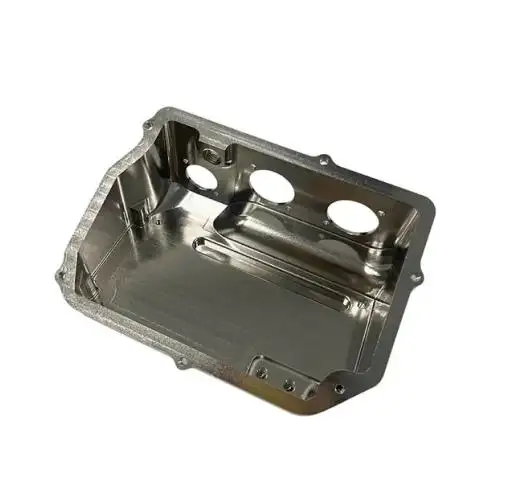
Complex geometry appears in many industries. It may include deep cavities, compound curves, undercuts, angled faces, thin walls, sculpted surfaces, or multi-directional features that cannot be reached easily with conventional setups. On a screen, these designs may look complete. In production, however, geometry becomes a manufacturing question. This is where 5 axis CNC prototyping becomes highly valuable.
Why Complex Geometry Requires a Different Prototype Approach
A simple part can often be machined with standard 3-axis methods. A more advanced part usually cannot. Once a component includes several intersecting surfaces or difficult tool access points, the machining strategy starts to affect accuracy, efficiency, and design confidence.
This is why complex geometry should not be judged only by CAD appearance. It should also be judged by whether the design can be translated into a physical part without creating too many compromises.
At GD Prototyping, we use 3 axis, 3+2 axis, and full 5-axis milling to match the actual geometry requirement of the part. For clients, that means the machining process is selected according to function, not just equipment availability.
In practical terms, complex geometry often requires:
• Better access to multiple part faces in one setup
• More stable control of angled and curved surfaces
• Less repositioning during machining
• Better consistency across connected features
• More realistic prototype validation before production
When geometry becomes more demanding, the prototype must do more than show the general shape. It must explain whether the part is manufacturable and whether the design logic is strong enough to move forward.
What 5 Axis CNC Prototyping Actually Explains
The value of 5 axis CNC prototyping is not limited to speed or technical sophistication. Its real value is explanatory. It helps designers, engineers, and buyers understand what complex geometry means in physical manufacturing terms.
For example, a part may contain surfaces that look smooth in the CAD model but become difficult to machine cleanly with limited tool access. A prototype made with 5-axis capability can reveal whether those surfaces remain consistent, whether transitions are smooth, and whether the geometry supports the intended function.
This is especially important in parts such as:
• Impellers
• Engine components
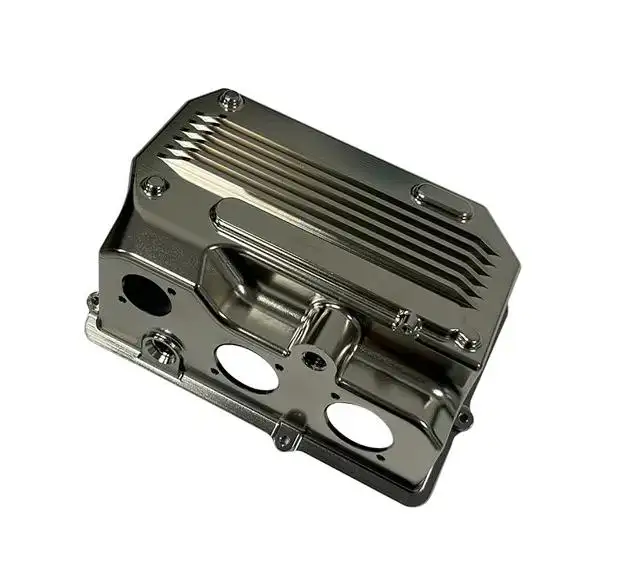
• Precision housings
• Reflective bowls
• Medical or automation parts with multi-angle features
In these applications, geometry is closely linked to performance. The prototype therefore becomes more than a sample. It becomes a way to study how the part behaves when the design meets real machining conditions.
At GD Prototyping, we see this often in projects where clients need to verify more than dimensions alone. They also need to confirm surface continuity, access logic, assembly relationship, and whether the part can move toward low-volume production without substantial redesign.
How 5 Axis CNC Prototyping Reduces Geometry Risk
Complex geometry introduces risk in several ways. A difficult surface may be machinable but inefficient. A tight internal feature may be possible in theory but unstable in practice. A part may also require multiple setups, which increases the chance of alignment deviation.
This is where 5 axis CNC prototyping provides clear value. It helps reduce the problems that often come up with multi-face or sculpted parts by letting tools move more freely.
For clients, this could mean:
• Fewer setup changes
• Better positional accuracy between features
• Improved machining access on difficult surfaces
• Smoother surface transitions
• Lower risk of geometry distortion during processing
With the right CNC applications, GD Prototyping can handle very tight tolerances of ±0.05 mm and surface roughness of Ra 0.2 μm. These numbers are important because complex geometry often has functional or visual features that lose value quickly if the machining result isn't consistent.
This is not only a technical advantage. It is also a development advantage. Better geometry control means the client can make earlier and more reliable decisions about fit, function, and next-stage manufacturing planning.
Surface Quality and Detail Matter on Complex Parts
Complex geometry is often evaluated through detail, not just structure. A part may include flowing contours, visible outer surfaces, or performance-critical channels that require both dimensional accuracy and surface quality.
For this reason, 5 axis CNC prototyping helps explain whether the part is only theoretically correct or physically convincing. That distinction matters in both engineering review and customer presentation.
GD Prototyping provides a wide range of materials and finishes for CNC machining, including engineering plastics and metal hardware such as ABS, POM, PC, Nylon, Aluminum 6061, 7075, Brass, Copper, and Titanium Alloy. This allows clients to evaluate geometry under more realistic material conditions.
Surface options such as anodizing, polishing, sandblasting, and brushed finish also support the validation of complex parts. Their value to the client is practical:
• Polishing can improve the readability of curved metal surfaces
• Sandblasting can create a more even visual texture
• Anodizing can support appearance and corrosion resistance on aluminum parts
• Brushed finishes can reduce the visibility of minor marks on visible surfaces
When a complex prototype is reviewed by engineering, sourcing, or management teams, these details help the part communicate more clearly.
Why Geometry Validation Matters Before Production
One of the most important lessons from 5 axis CNC prototyping is that complex geometry should be validated early. A part that looks acceptable in design software may still create cost, tolerance, or production issues later if the machining reality is not tested soon enough.
At GD Prototyping, our in-house machine shop operates 24/7, and we provide one-on-one support service response within 12 hours. For clients, this means faster communication and quicker transition from drawing review to prototype action.
This support becomes especially useful when the part is moving toward pilot build or low-volume production. Many products do not go directly from a digital model to large-scale manufacturing. They first pass through a stage where geometry, quality, and repeatability must all be reviewed together.
That is why clients should use the prototype stage to answer questions such as:
• Can this complex geometry be machined consistently?
• Does the prototype reflect the true design intent?
• Are surface and tolerance requirements realistic?
• Can this part move toward scalable production without major redesign?
A supplier that helps answer these questions provides more than parts. It provides decision support.
How GD Prototyping Helps Clients Gain More From 5 Axis CNC Prototyping
At GD Prototyping, we position 5 axis CNC prototyping as a practical solution for analyzing complexity and supporting development decisions, rather than as a purely technical upgrade. Its value comes from helping clients move from design uncertainty to engineering clarity.
Our CNC machining services support prototypes, low-volume production, and end-use parts. That means we can help clients review complex geometry not only as a single prototype challenge, but also as part of a broader manufacturing path.
This brings several direct advantages to clients:
• More complete understanding of challenging geometries
• Stronger confidence in the accuracy of the prototype
• Earlier recognition of potential manufacturing issues
• A smoother route toward low-volume and production preparation
• More reliable decisions throughout development
If your team is designing a part with curved surfaces, complex angles, deep cavities, or strict visual requirements, this is the right moment to test how the geometry performs in real machining practice. Discuss your project with GD Prototyping and see how our 5-axis CNC capability can help you validate complex parts more precisely, more efficiently, and with greater development confidence.
