


3D Printing Service In China: Reliable OEM Support For Global Brands
3D Printing Service in China is no longer only for "quick mockups." For many global brands, it has become a practical OEM pathway to validate designs faster, reduce tooling risk, and move from CAD to functional parts with fewer surprises. At GD Prototyping, we support product teams that need speed and repeatability—using industrial-grade additive manufacturing, clear engineering review, and disciplined inspection so prototypes behave like real parts, not fragile showpieces.
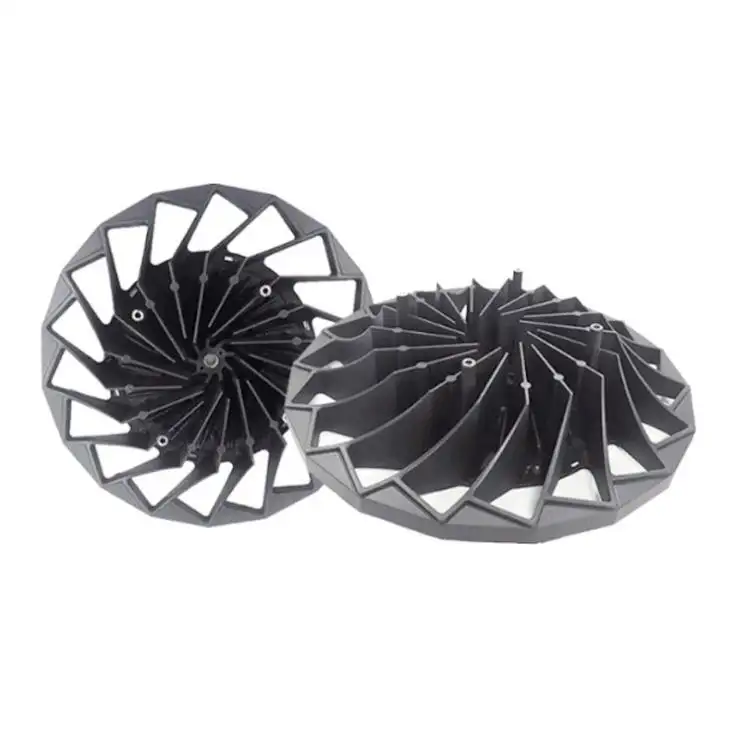
If you are new to additive manufacturing, the biggest mindset shift is this: success is not choosing a "famous" printing method. Success is choosing a process, material, and finishing plan that matches the test you need to run—fit, strength, airflow, heat, or appearance—then repeating it reliably across iterations.
Why Global Brands Use 3D Printing Service in China for OEM Programs
In early product development, fast decisions matter. But in OEM work, repeatable output matters even more. A capable 3D Printing Service in China should help you shorten design cycles without creating a second problem—unstable quality, unclear tolerances, or inconsistent finishing that makes your team re-test the same idea again and again.
In real projects, additive manufacturing shines because it reduces "dead time" between versions. You can test assembly logic before investing in hard tooling. You can confirm clearances before a supplier cuts steel. You can validate function before a marketing timeline forces a rushed launch.
✅ Faster decisions without molds, fixtures, or early-stage tooling
✅ Earlier verification of assemblies, clips, channels, and internal structures
✅ Lower upfront risk while you iterate toward a production-ready design
At GD Prototyping, we support both plastic and metal printing so your team can test realistic material behavior, not only "demo plastics." That typically means better feedback from real users, more confident internal reviews, and fewer late-stage design reversals when you scale.
Choose a Process By Outcome, Not By Name
A common beginner mistake is selecting a technology because it sounds familiar. Instead, start with your goal: "What must this part prove?" Then match the process to that outcome.
Inside a modern 3D Printing Service in China, four technologies cover the majority of OEM use cases: SLA, SLS, MJF, and DMLS/SLM. Each one solves a different problem well, and each one has tradeoffs that matter when you care about production realism.
✅ Pick the process that matches the test: appearance, durability, or metal performance
✅ Decide what you will measure: fit, strength, heat resistance, or user feel
✅ Confirm tolerances and finishing expectations before you print version one
SLA for Detail, Surface Quality, and Presentation Samples
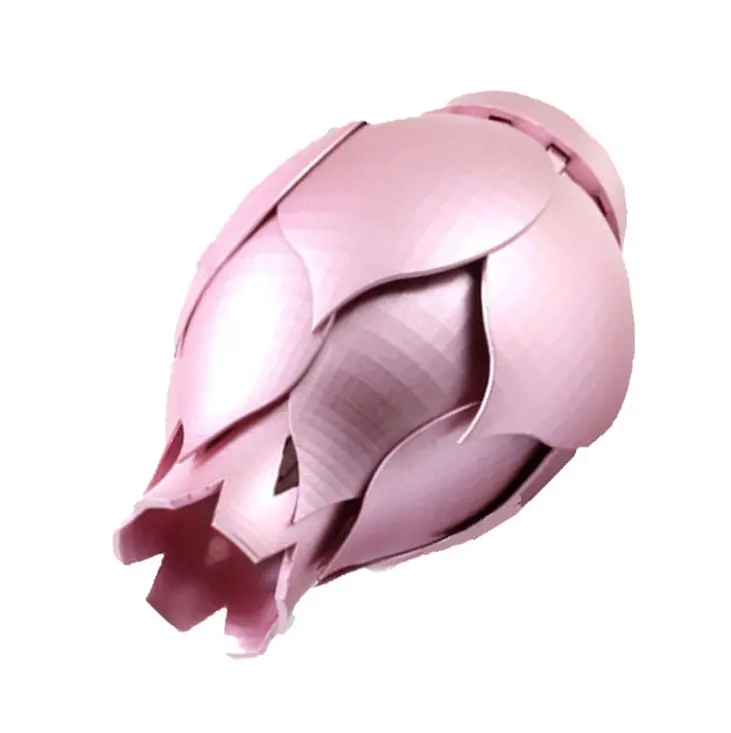
SLA (Stereolithography) uses UV curing to build parts layer by layer. If your team needs a prototype that looks close to a final consumer product—clean edges, sharp detail, smooth surfaces—SLA is often the first choice.
SLA is especially useful when appearance influences decision-making. Stakeholders approve concepts faster when they can hold a model that looks "real." It also helps when you need fine features, crisp lettering, or small design elements that must be evaluated visually.
✅ Smooth surfaces for presentation models and display samples
✅ Fine detail for intricate shapes and premium-looking prototypes
That said, the real value comes from planning. If the goal is a photo-ready prototype, you should discuss orientation, support marks, and finishing steps upfront. That is how you avoid "beautiful in CAD, messy in hand."
SLS and MJF for Tough Plastic Parts That Behave Like Real Products
If your prototype must survive handling, vibration, or field trials, you typically need stronger plastics and more stable functional performance.
SLS prints nylon without support structures, which makes it ideal for complex shapes, internal channels, and parts with geometry that would be painful to support or clean up. It is commonly chosen when you need durability and heat resistance in a plastic prototype.
MJF is often selected when you want efficient low-volume production of strong plastic parts with consistent dimensions. It is a practical option for small-batch OEM builds when you are not ready to commit to injection molds.
✅ Durable nylon parts for functional testing and short field trials
✅ Complex geometry without the cost and labor of support removal
✅ Efficient small-batch production before injection molding makes sense
In OEM programs, this is where "prototype-to-production" starts to feel real. You can test snap fits, mounting points, airflow paths, and assembly steps with a material behavior that is much closer to final products.
DMLS/SLM for Dense, High-Strength Metal Parts
When plastic proxies stop being useful, metal printing becomes a serious tool—especially for parts that must handle heat, load, corrosion, or demanding mechanical performance.
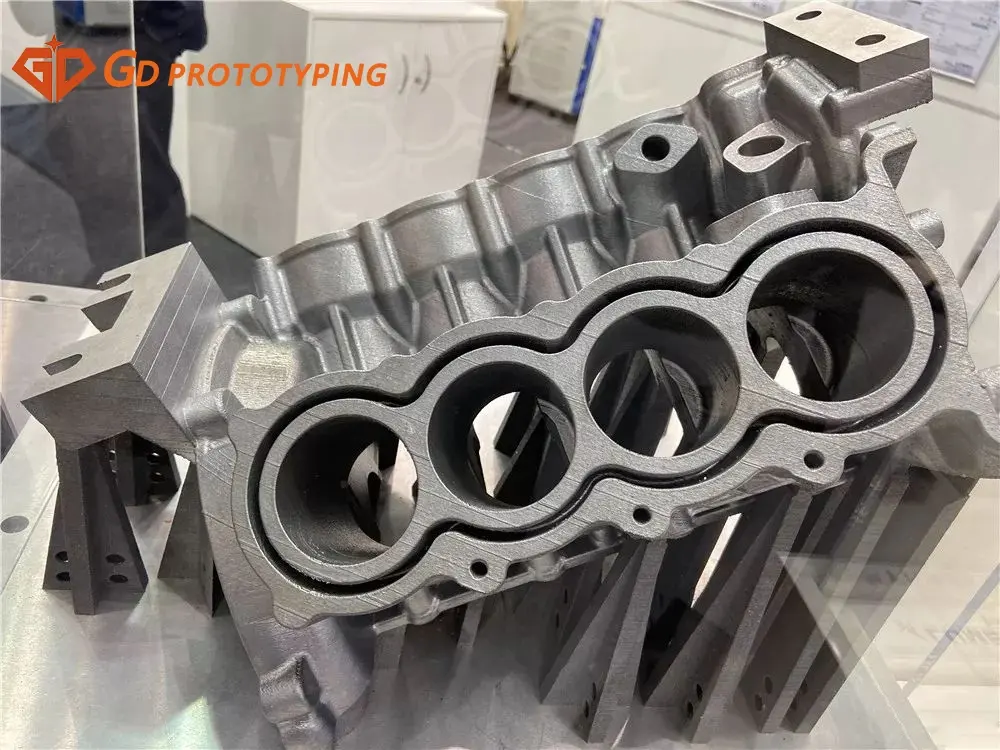
DMLS/SLM can produce dense metal parts in materials such as stainless steel, aluminum alloys, and titanium alloys. For many OEM teams, this enables realistic testing for brackets, housings, fixtures, and components where strength and thermal behavior matter.
✅ Bridge builds in metal when plastic, urethane, or cast surrogates won’t tell the truth
✅ Complex shapes in low volumes without custom tooling
Metal printing is selective by design—use it to get reliable data before you scale. The key is to treat it like engineering, not magic: define critical surfaces, define post-processing, and define inspection points before the build starts.
What "Fast Turnaround" Should Mean in Real Projects
"Fast" is easy to say. In a well-run 3D Printing Service in China, fast turnaround is not a promise—it is a system.
Speed depends on how smoothly these steps connect:
- engineering review, 2) build planning, 3) print execution, 4) finishing, 5) inspection, 6) packing and delivery.
At GD Prototyping, many prototype jobs can move quickly when requirements are clear, and lead times often start from around 48 hours depending on geometry and workload. But the bigger benefit is what that speed does to your workflow: you can test sooner, review earlier, and lock decisions before your schedule becomes expensive.
✅ Shorter iteration loops that reduce time-to-market pressure
✅ Earlier testing that prevents late-stage redesigns
✅ Better alignment between engineering, sourcing, and marketing
If your supplier is truly helping, "fast" should feel calm—not chaotic. The goal is fewer emergency fixes, not more.
Materials and Finishing: Two Levers That Make Parts OEM-Ready
A prototype is only valuable if it behaves like the part you wish you already had. That is why material selection matters more than most beginners expect.
A strong 3D Printing Service in China should support common engineering plastics and metals, but the real skill is matching material behavior to your test objective:
• If you need fit, focus on dimensional stability and predictable shrink behavior.
• If you need strength, focus on load direction, wall thickness, and post-processing.
• If you need heat resistance, choose materials that survive real temperature ranges.
• If you need appearance, choose materials and finishing that mimic final texture and color.
Finishing is the second lever. Many global brands need prototypes for internal demos, distributor reviews, or early marketing photography. We support finishing options such as painting, polishing, dyeing for nylon, clear coating, electroplating for resin parts (where applicable), vapor smoothing for suitable materials, and bead blasting for a uniform matte look. For metal printed parts, heat treatment can improve strength and reliability.
✅ Match materials to the test goal: fit, strength, heat, or appearance
✅ Use finishing to simulate final product touch and surface expectations
✅ Reduce prototype-to-production surprises with realistic surfaces early
A simple rule helps: if your team is arguing about how something feels, you probably need finishing. If your team is arguing about whether something fits, you probably need tighter process control and clearer tolerance targets.
Quality Control and Communication: The Real OEM Advantage
In OEM programs, the difference between a supplier and a long-term partner is process control. A reliable 3D Printing Service in China should help you avoid avoidable disputes by making expectations explicit: what will be measured, what will be accepted, and what will be reworked before shipping.
At GD Prototyping, we treat communication as part of quality. We assign a project manager as a single point of contact, and for many inquiries we can provide a quotation within 6 hours or less. For production-oriented builds, we add DFM into the quote to solve problems early—before they become schedule risk.
• Crisp quotes that reduce time-zone thrash
• Practical DFM that trims waste and rework
• Inspection discipline for clean acceptances
• Stability is engineered upfront—not after the apology.
CTA: Begin Your OEM Validation Plan with GD Prototyping
If you’re assessing a 3D Printing Service in China, start small and test-driven. Share CAD, material (plastic/metal), use case, and quantity. We’ll select SLA/SLS/MJF/DMLS-SLM, set finishing options, and build a sampling path that helps you scale with fewer surprises.
• Quote request: files, envelope, material, finish
• Quick engineering review to prevent issues
• Prototype to small batch—validate before hard tooling
