


3D Printing Technology Selection Made Easy – Fast, Cost-Effective 3D Printing Quote Service
As additive manufacturing techniques continue to advance, the challenge of selecting the appropriate 3D printing techniques for engineers, product designers and buyers has become more significant. Multiple 3D printing techniques exist with unique advantages, disadvantages and appropriate applications. This guide attempts to assist you with the compromise of cost versus speed versus quality.
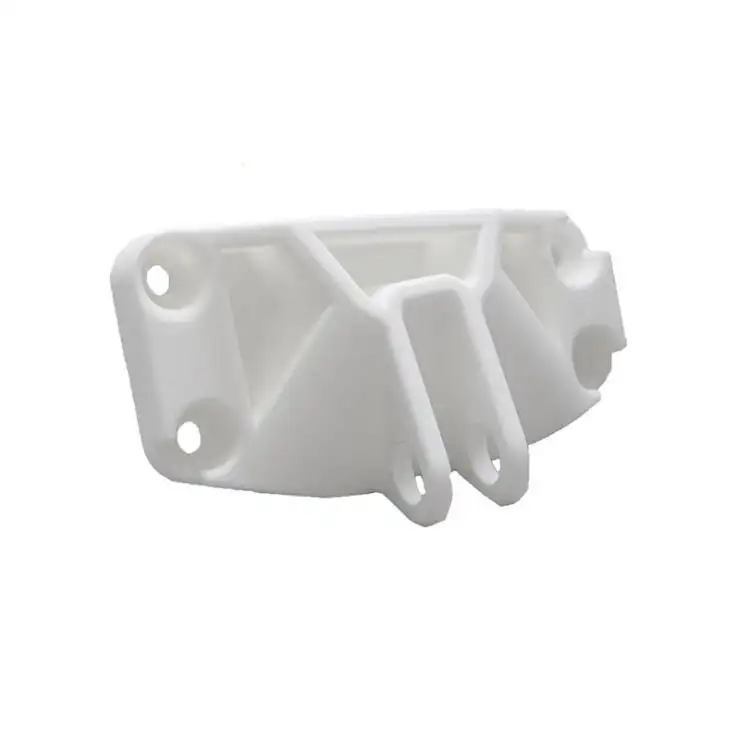
Step 1: Define Your Project Requirements
Before you can evaluate any technologies, you need to determine what your part needs to do. Use the following questions to help determine your options.
• What is the function of the part? Is it a visual aid, a functional test, or a part for end-use?
• What part of the physical and chemical properties of the material do you need? Do you need a metal or plastic? Does the part require chemical strength or heat resistance?
• What is the quality of the finished part? Does the part need to be a smooth, paintable, surface, or can it have texture?
• What is the quantity of the part? Is it a single part, a batch of parts, or continual production?
• What are the constraints of cost and time? How much time and money do you have to spend?
Considering your budget and the quality of material, surface finish, and production volume, you can now map your requirements to available technologies.
Step 2: Grasp the Key 3D Printing Technologies
Metal and plastic 3D printing technologies at GD Prototyping use SLA, SLS, MJF, and DMLS. The following summarizes the printing technologies and their offerings.
1. Stereolithography (SLA) - Speed and Quality
SLA has a more advanced method of solidifying the resin by tracing it with a vat of UV light, eliminating the layer-by-layer technique. Parts constructed with SLA are finished with UV light and have really fine details. It is highly recommended to use SLA in the case that your part has a delicate visual or highly detail oriented features.
• Best used for: Jewelry, dental casts, prototypes, fine visual aids, and cooperation aids with high tolerance.
• Key Strengths: SLA has intricate detail and features with excellent surface finishes and has high accuracy with ±0.15 mm tolerance.
• Materials: SLA has a wide variety of photo-curable resin.
• Build Size: 1380 x 680 x 480 mm with adjustable layer height of 50–100 μm.
• Lead time: 3 Business Days
2. Selective Laser Sintering (SLS) - Durability and Design Freedom
SLS has a more advanced method of using a laser to sinter nylon powder in a vat, and unlike SLA, SLS does not require support structures. SLS allows a design to have many interlocking parts in the vat which are already made.
• Best used for: Prototypes and final production parts and assemblies that are designed to withstand high-temperatures and require a high degree of durability.
• Key Strengths: SLS creates parts that are strong on their own as SLS does not produce a surrounding support structure.
• Materials: SLS can use a variety of nylons and thermoplastics.
• Build Size: SLS can produce parts of dimensions 320 × 320 × 580 mm with a resolution of 80 μm.
• Lead Time: Minimum of 3 business days
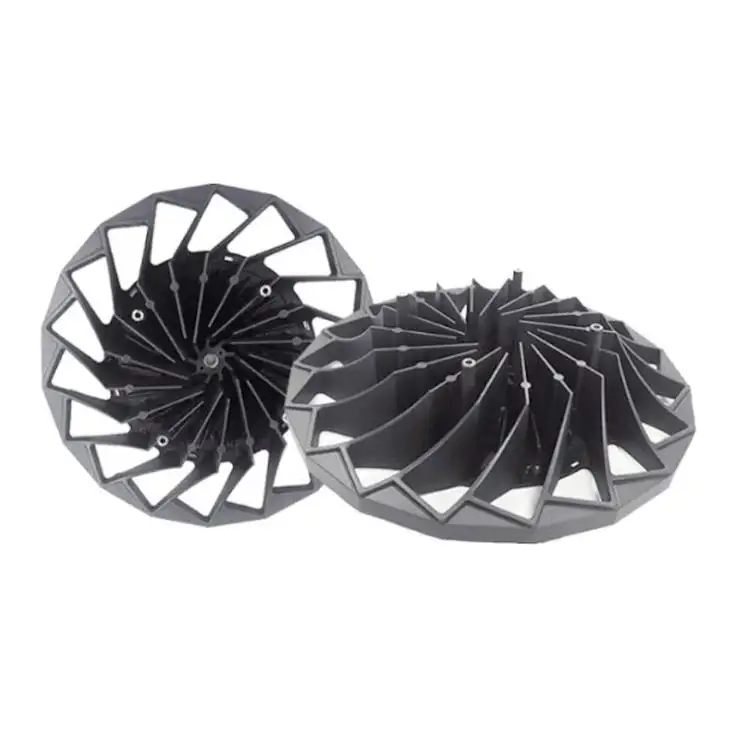
3. Multi Jet Fusion (MJF) - Speed and Efficiency of Production
MJF helps speed the fabrication process. MJF adds a binding layer of agents to a layer of nylon powder. MJF applies heat to finish and fuse the layer.
• Best for: Consistency and needs for rapid production and prototyping.
• Key Benefits: Cost and volume strength savings.
• Available Materials: Predominately nylon and modern thermoplastics.
• Build Size: 380 × 285 × 380 mm; 80 µm layer height.
• Lead Time: 3 business days.
4. Direct Metal Laser Sintering (DMLS) - High Strength Metal Parts
DMLS fully melts or sinters metals via lasers, allowing the creation of fully metal parts and all the benefits that metal brings to a design.
• Best for: Large and high strength parts required for the aerospace and medical fields, and any metal part.
• Key Advantages: Fully dense metal parts and high mechanical strength.
• Material Range: Stainless Steel, Aluminum, Titanium and others
• Build Size: 200 × 200 × 300 mm, 30 µm layer height.
• Lead Time: 7 business days.
Step 3: Match Your Requirements to the Right Technology
1. For Visual Prototypes and Aesthetic Models
SLA is usually the best option for confirming form, fit and function, and is typically the most economical. Smooth surface finish and detail of SLA parts are ideal for presentation, and evaluation and testing of designs.
2. For Functional Testing and Mechanical Validation
When parts are required to be durable and withstand mechanical stress of the environment, SLS or MJF are the best choices. For the most cost effective option of a single, rigid plastic prototype, SLA or SLS is the best option. If superior strength and durability are preferred, go with SLS or MJF.
3. For Production and Small-Batch Manufacturing
MJF is excellent for all production use cases. When needing many or hundreds of identical, strong nylon parts, MJF is the preferred option. When considering a metal production part, DMLS is preferred.
4. For Metal Components
When metal is a requirement, DMLS is the only recommended technology for aerospace, medical, and industrial applications. DMLS allows clients to produce parts with mechanical properties comparable to metal that are forged.
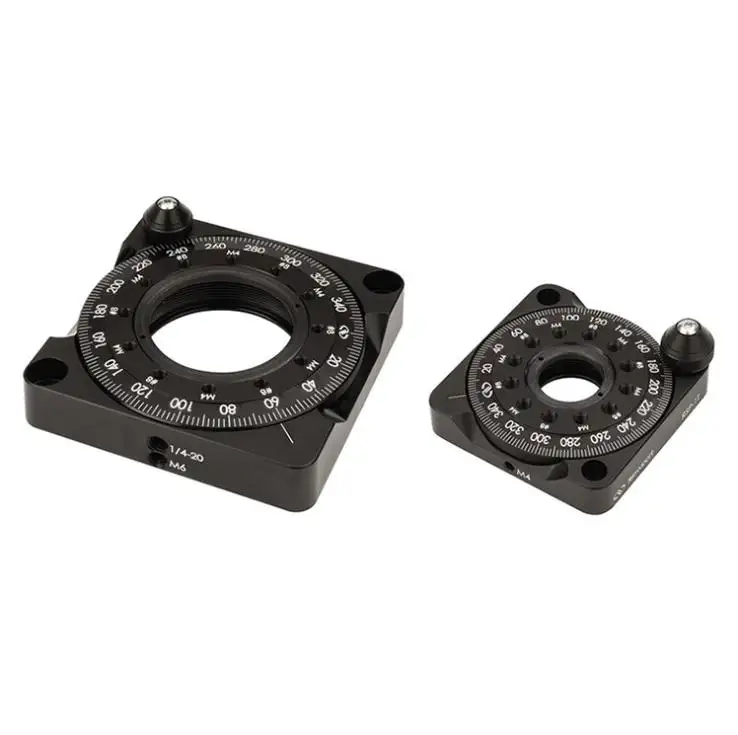
Step 4: Consider Material Selection
Material choice is critical as is the choice of technology. GD Prototyping offers many options in both plastics and metals for prototyping and production:
• Plastics: ABS, PC, PP, Nylon (PA6/PA66), POM, PMMA, PEEK, PTFE, Flame-retardant ABS/PC, and others.
• Metals: Aluminum (6061, 2024, 7075, ADC12, etc), Copper, Brass, Titanium, Magnesium, Zinc, and allied
If you have a specific material in mind that is not listed, select "Custom" on the quote page, and the material will be reviewed for custom engineering.
Step 5: Consider Surface Finish and Post-Processing
Each technology results in specific surface finishes, and post-processing has a great impact on the external quality and performance of the part. The most common finishing options are:
• Standard Finish: Cleaning and removing supports with a basic smoothing.
• Painting: Total coating of a part to achieve a specific color/quality of gloss and surface texture.
• Polishing: Smoothing and shining a surface with a high luster
• Electroplating: A thin metal layer is added for external quality and for enhanced metal conductivity
• Dyeing: Parts (Nylon) are immersed to a dye solution to obtain a uniform color.
• Vapor Smoothing: A solvent vapor is used to gloss and smooth the surface.
• Bead Blasting: A uniform finish with a matte texture is achieved.
• Heat Treatment: A post process to improve the strength of metal printed parts
Step 6: Get a 3D Printing Quote Service
The last step after you have selected the appropriate technology and material, is to get a 3D printing quote service. An accurate quoting process should be transparent for the selection of material, build setup and post processing as well as an engineering review.
When selecting a 3D printing quote service, consider the following:
• Technology alignment: Does the service have the technology you need?
• Material availability: Can the service access the exact material grade you need?
• Quality Assurance: What are their testing and inspection protocols?
• Lead Time Commitments: Will they make your deadlines?
• Expertise and Support: Will they assist you with your design and DFM?
GD Prototyping offers all varieties of rapid and accurate 3D printing services. Every shipment is accompanied by a testing and inspection report, complete with printed pictures.
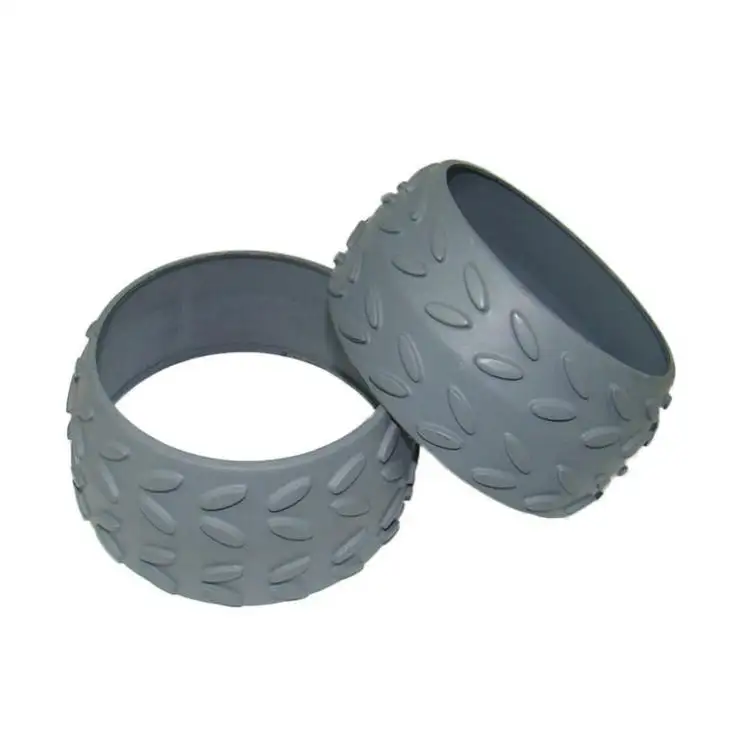
Decision Summary: Quick Reference Guide
| If you need... | Choose... | Why |
| Short time to first part | 3D printing | Eliminates part fabrication time |
| Short lead time | 3D printing | Lead time for 3D printing is less than machining |
| More complex geometries | 3D printing | 3D printing can create more complex part geometries |
| Cost effective prototyping | 3D printing | 3D printing is more cost effective than traditional methods |
| 3D printed metal parts | 3D printing | Metal part fabrication is limited to 3D printing |
| Additive manufacturing | 3D printing | 3D printing is the term for additive manufacturing |
Final Words
There is a lot to consider when deciding which 3D printing technology to use. You need to focus on the requirements for your project and choose a manufacturing partner that meets your needs for quality, speed, and price. After determining the requirements for your project, considering the technology, and assessing the available materials and finishes, you will be able to confidently choose the technology to meet your requirements and provide the solution to your project.
If you still have not found the 3D Printing Service that meets the requirements of your design, contact us. With 3D printing technology, we have over 12,000 square meters of production area. Our reputation draws customers worldwide for fast, high-quality service. GD Prototyping is your partner, whether you need prototype parts or production run components.
Get in touch for a quote and see why our customers call us the cutting-edge 3D printing experts.
FAQs
Q1. What is DfAM and why is it important?
DfAM is the process of designing parts with specific 3D printing features in mind. This increases the likelihood of print success, while reducing the need for supports and the amount of material used to print. The principles of DfAM can be used to decrease project cost.
Q2. How do I select the proper material?
The appropriate material should match the environment reciprocal to the part. If the part will be subject to high mechanical stresses, you should consider nylon or PEEK. If the part is to be a visual model, consider resin and for parts that require high strength at elevated temperatures consider aluminum or titanium.
Q3. Are 3D printed parts suitable for end-use components?
3D printed parts, more specifically, those produced using SLS, MJF (plastics), and DMLS (metal), have the strength and durability needed for end-use components and are ideal for low volume production.
Q4. What are the biggest influences on the cost of a 3D print?
The technology used, material, size and complexity, required post-processing, and quantity are the biggest influences on the cost of a 3D print. A good quoting system should account for all of these.
Q5. How much does surface finish impact technology selection?
This is highly dependent on the end goal. For a visual prototype, SLA is likely the best option because of its superior surface finish. For functional test parts, a SLS/MJF part is likely the best option, despite its rough surface finish. SLS/MJF surface finish can be improved with post-processing.
